
Top 10 Benefits of Using Alumina Metallized Ceramics in Aerospace Engineering
Aerospace engineering demands materials that can withstand extreme conditions, including ultra-high temperatures, high vacuum, intense vibration, rapid temperature cycling, and corrosive environments. Alumina metallized ceramics — high-purity aluminum oxide (Al₂O₃) substrates combined with a precisely applied metallization layer — have emerged as a critical advanced material in the industry. By merging the superior properties of technical ceramics with the joining capabilities of metals, alumina metallized ceramics deliver unmatched reliability for demanding aerospace applications.
This article explores the top 10 benefits of using alumina metallized ceramics in aerospace engineering, providing valuable insights for engineers, aerospace manufacturers, and materials specialists.
1. Exceptional High-Temperature Stability and Thermal Shock Resistance
Alumina metallized ceramics boast a melting point exceeding 2050°C and a very low coefficient of thermal expansion (approximately 7–8 × 10⁻⁶/°C). These properties enable them to maintain structural integrity under the extreme heat generated in rocket engines, thermal protection systems, and atmospheric re-entry vehicles.
Their outstanding thermal shock resistance significantly enhances safety and performance during launch and re-entry phases, outperforming many traditional metals in high-temperature aerospace environments.
2. Superior Electrical Insulation Performance
Aerospace electronic systems often operate under high voltage, high frequency, and strong electromagnetic interference. Alumina metallized ceramics offer excellent dielectric strength (>15 kV/mm) and high volume resistivity, maintaining reliable insulation even at elevated temperatures.
This makes them ideal for high-voltage insulators, sensor packaging, and electronic control modules, effectively preventing arcing, leakage, and signal distortion in critical aerospace electronics.
3. Reliable Hermetic Sealing and Joining Capability
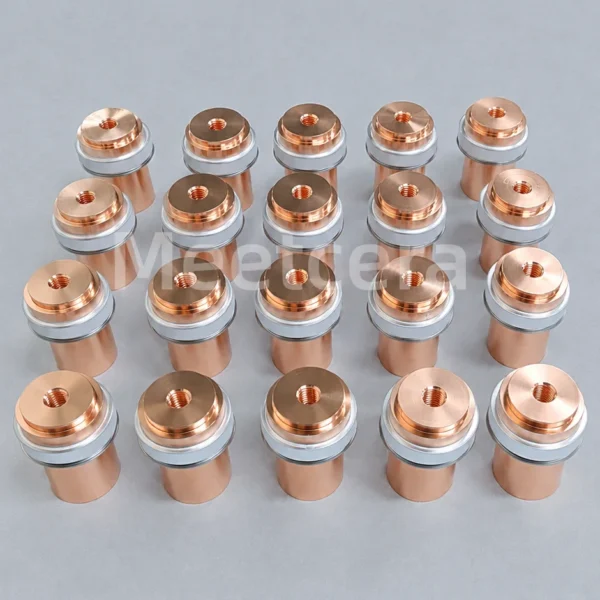
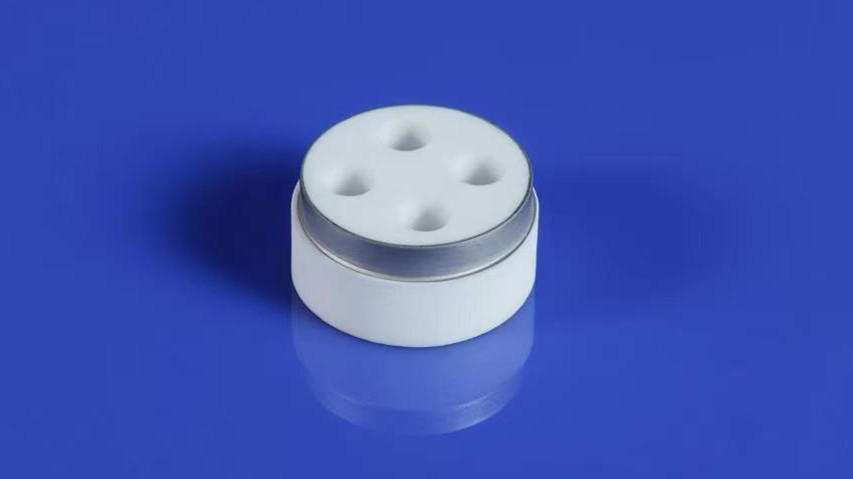
Advanced metallization processes (such as molybdenum-manganese or active metal brazing) create a dense metallic layer on the ceramic surface, allowing strong, hermetic bonding with metals like Kovar or titanium alloys.
This capability is essential for manufacturing vacuum feedthroughs, windows, and sensor housings that must maintain perfect seals in the high-vacuum conditions of space.
4. Significant Weight Reduction Advantages
With a density of only about 3.9 g/cm³, alumina metallized ceramics provide high specific strength and stiffness. In satellites, spacecraft, and reusable launch vehicles, replacing heavier metals with these ceramics substantially reduces overall system weight, improving fuel efficiency and increasing payload capacity.
Every kilogram saved can translate into substantial cost savings in launch expenses.
5. Outstanding Corrosion and Oxidation Resistance
Space environments expose components to atomic oxygen, propellant residues, and high-energy particle radiation. Alumina metallized ceramics exhibit excellent chemical stability and oxidation resistance, maintaining performance over long durations without degradation.
This durability significantly extends the service life of critical aerospace components.
6. Excellent Thermal Management Properties
Alumina metallized ceramics offer a well-balanced combination of thermal conductivity and thermal stability. Engineers can design components that effectively dissipate heat from electronics while providing insulation where needed, protecting sensitive instruments from extreme temperature fluctuations in orbit.
7. High Mechanical Strength and Vibration Resistance
Launch vehicles experience intense vibration and shock loads. With flexural strength typically reaching 300–400 MPa, alumina metallized ceramics demonstrate robust mechanical performance, ensuring structural integrity throughout the entire mission profile.
8. Superior Vacuum Compatibility and Low Outgassing
In the ultra-high vacuum of space, material outgassing can contaminate sensitive optics and sensors. Alumina metallized ceramics feature extremely low outgassing rates, especially after proper baking procedures, making them a preferred material for vacuum-compatible aerospace applications.
9. Excellent Dimensional Stability and Precision
These ceramics exhibit minimal creep and outstanding long-term dimensional stability, even under prolonged high-temperature and mechanical stress. This precision is vital for high-accuracy optical systems, microwave components, and inertial navigation devices used in aerospace.
10. Cost-Effectiveness Through Long Service Life
While initial costs may be higher than conventional materials, the extended lifespan and minimal maintenance requirements of alumina metallized ceramics result in significantly lower total lifecycle costs. Higher mission success rates and reduced replacement needs make them economically attractive in today’s competitive commercial space sector.
Conclusion
Alumina metallized ceramics are transforming material selection in aerospace engineering by combining lightweight design, extreme reliability, and multifunctional performance. From high-temperature structural components to precision electronic packaging, they play a vital role in pushing the boundaries of human spaceflight toward greater safety, efficiency, and affordability.
In an era of rapid innovation in materials science, mastering alumina metallized ceramics technology will remain a key competitive advantage for forward-thinking aerospace companies.