
How-precise-is-thickness-control-in-nickel-plated-mo-mn?
Engineers working with ceramic metallization often face inconsistent nickel plating thickness on Mo-Mn layers, leading to poor solderability, weak brazing joints, or premature failure in vacuum and power electronics. Precise nickel-plated Mo-Mn thickness control is essential for reliability.
This article explains typical thickness ranges, main challenges in achieving uniformity, proven control methods, and quality measures used in high-performance ceramic-to-metal assemblies.
1.What Thickness Range Is Typically Required for Nickel-Plated Mo-Mn?
Nickel plating thickness on Mo-Mn metallized ceramics depends on the application:
- Electronics and microelectronics: Usually <5μm (commonly 2-5μm). This thin, uniform layer provides excellent solderability and corrosion resistance while maintaining electrical performance.
- High-stress or vacuum brazing applications: Often >10μm or 3-8μm range for better wettability and mechanical protection during brazing with AgCu alloys.
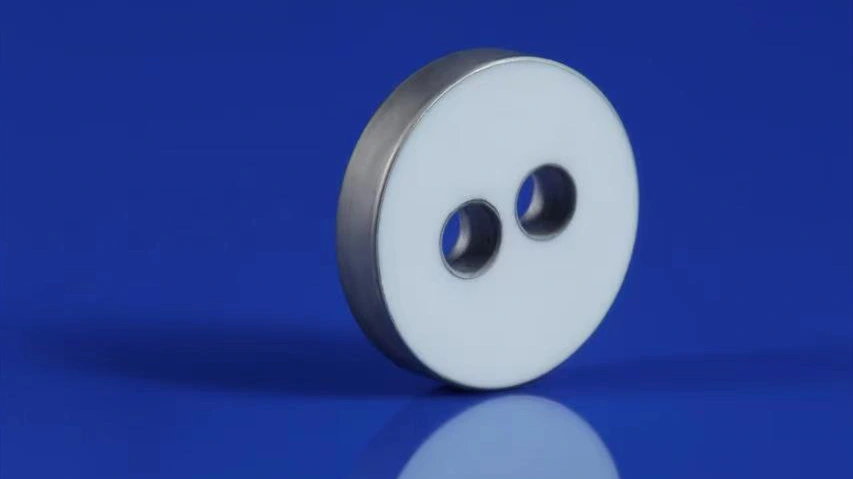
On Meetcera’s standard Mo-Mn metallized ceramics, the sintered Mo-Mn layer is typically 15-25μm, followed by a nickel layer of 8-10μm. Selecting the right thickness balances functionality, cost, and durability in the operating environment.
2.Why Is Uniform Thickness Difficult to Achieve?
Complex component geometries create several plating challenges:
- Uneven current distribution: Higher deposition rates at edges and protrusions, lower rates in recesses and holes.
- Electrolyte depletion: Stagnant areas experience ion starvation, resulting in thinner deposits.
- Temperature and bath variations: Fluctuations affect deposition speed and layer quality.
These issues commonly cause thickness deviations that impact brazing performance and long-term reliability.
3.How Can Precise Thickness Be Ensured?
Manufacturers achieve better uniformity through:
- Pulse plating and optimized anode designs to improve current distribution.
- Automated plating equipment with real-time parameter monitoring.
- Controlled bath chemistry and agitation systems.
These techniques compensate for geometric effects and reduce human error, delivering more consistent nickel layers across batches.
4.Can Sub-Micron Precision Be Achieved Consistently?
Yes, in demanding microelectronics and high-reliability applications, sub-micron nickel plating precision is attainable. Combining precise electrochemical deposition with atomic layer deposition (ALD) or tightly controlled electrolytic processes allows stable sub-micron tolerances.
Such precision is critical for components requiring exact dimensions, minimal stress, and extended service life in vacuum or power modules.
5.Key Quality Control Measures for Thickness Consistency
Reliable Mo-Mn metallization nickel plating tolerance relies on systematic QC:
- Non-destructive thickness measurement using XRF (X-ray fluorescence).
- Cross-section metallographic analysis for validation.
- Full process parameter monitoring (current density, temperature, pH, agitation).
- Helium leak testing and tensile strength verification on finished assemblies.
Regular inspection helps catch deviations early and ensures parts meet specifications.
FAQ
Q.What is the typical nickel layer thickness on Mo-Mn metallized ceramics?
A.Commonly 8-10μm.
Q.How tight can nickel-plated Mo-Mn thickness tolerance be?
A.Standard electrolytic plating achieves ±10-20% tolerance; advanced processes can reach sub-micron precision with strict controls.
Q.Why is nickel plating applied over Mo-Mn?
A.It improves wettability for brazing, protects the metallization layer, and enhances corrosion resistance and solderability.
Q.What measurement methods are used for nickel thickness?
A.XRF for non-destructive testing and cross-sectional microscopy for detailed verification.
6.Conclusion
Effective nickel-plated Mo-Mn thickness control combines application-specific thickness selection, advanced plating techniques, and rigorous quality control. By addressing current distribution and electrolyte challenges, manufacturers can deliver uniform, reliable ceramic metallized components for electronics, vacuum technology, and power devices.
Need custom nickel-plated Mo-Mn ceramics with tight thickness tolerances? Meetcera’s engineering team can help optimize your metallization process for performance and consistency.
Contact our technical team or explore our Mo-Mn metallized ceramic products for more details.