
Metallized Ceramics for Reliable Vacuum Feedthrough Seals
In high-precision vacuum systems, even microscopic leaks can compromise performance or damage equipment. Metallized ceramic vacuum feedthroughs ensure hermetic seals, combining electrical insulation, mechanical strength, and thermal resistance.
Applications: Semiconductor fabrication, particle accelerators, aerospace systems, medical imaging.
1. What Are Vacuum Feedthrough Seals?
A vacuum feedthrough allows electrical signals, power, gases, or fluids to pass from outside a vacuum chamber to the inside without breaking vacuum.
| Type | Function | Typical Use |
|---|---|---|
| Power Feedthrough | Transmit high voltage/current | Plasma chambers, power supplies |
| Instrumentation | Signal transmission | Sensors, diagnostics |
| RF Feedthrough | High-frequency signals | RF generators, accelerators |
| Multipin | Multi-channel transmission | Control systems |
2. What Are Metallized Ceramics?
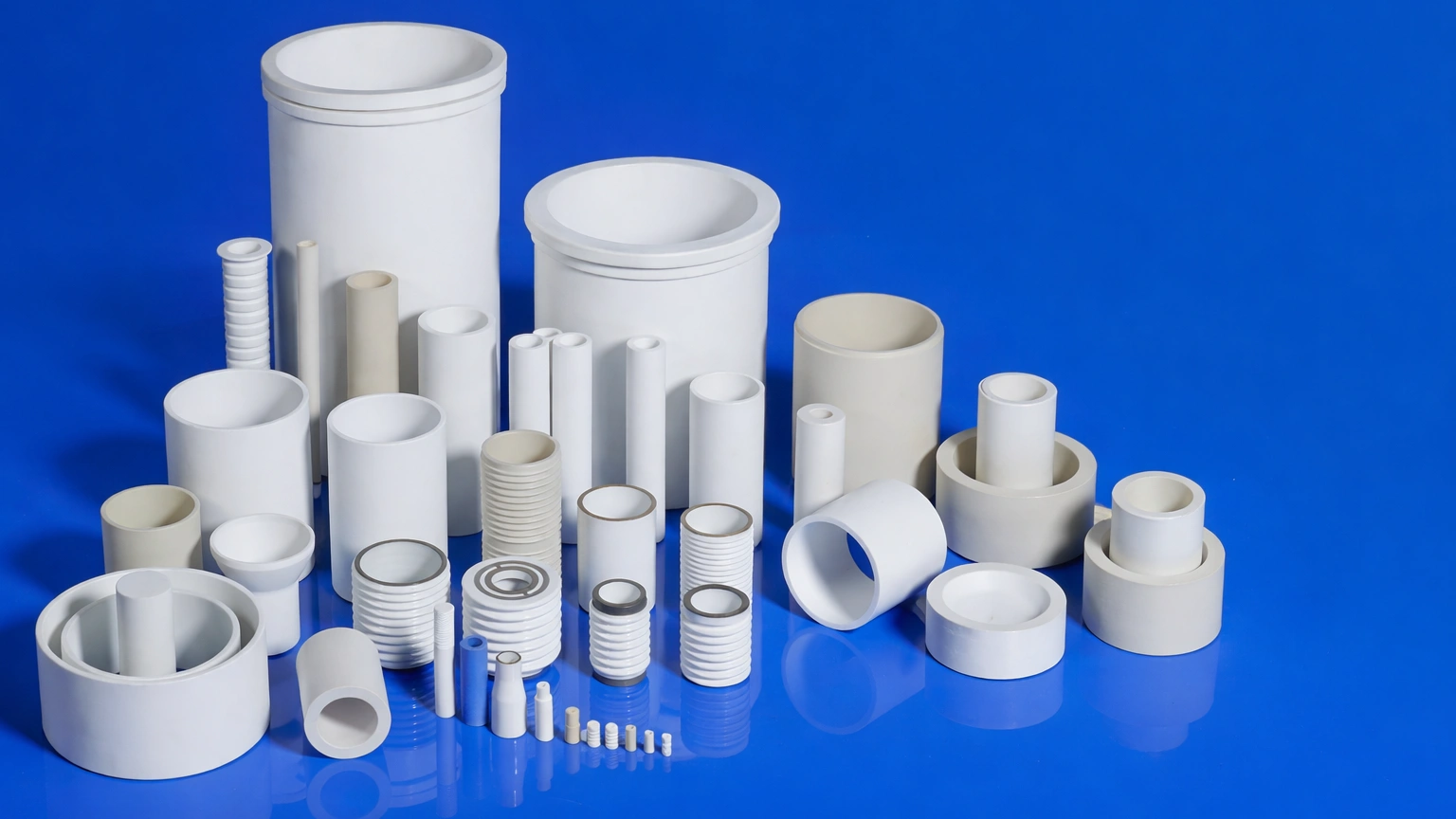
Metallized ceramics are ceramics coated with metal layers, enabling strong, hermetic bonding to metals such as titanium, Kovar, or stainless steel. The typical Mo–Mn process involves applying molybdenum–manganese paste, high-temperature sintering, and nickel plating, producing a robust ceramic-to-metal interface.
| Feature | Metallized Ceramic | Glass-to-Metal |
|---|---|---|
| Thermal Shock | Excellent | Moderate |
| Mechanical Stress | High | Moderate |
| Corrosion Resistance | Excellent | Low–Moderate |
| Max Temperature | >450 °C | ~400 °C |
| Leak Rate (UHV) | <1×10⁻⁹ Pa·m³/s | ~1×10⁻⁸ Pa·m³/s |
3. Applications of Metallized Ceramic Feedthroughs
Metallized ceramic feedthroughs are widely used in high-performance vacuum systems, where reliability, insulation, and durability are critical. Their unique combination of hermetic sealing, thermal resistance, and mechanical strength makes them ideal for industries that demand both precision and stability.
Below is a summary of typical applications and the key benefits they provide:
| Industry | Example Applications | Key Benefits |
|---|---|---|
| Semiconductor & Electronics | Vacuum chambers, plasma etching equipment | UHV sealing, high voltage insulation |
| Aerospace & Defense | Satellites, propulsion systems | Vibration resistance, thermal stability |
| Medical Devices | X-ray machines, implantable devices | Corrosion resistance, compact design |
| Scientific Research | Particle accelerators, vacuum furnaces | Low outgassing, ultra-low leak rates |
| Energy | Solid oxide fuel cells, high-pressure reactors | Extreme temperature & pressure tolerance |
Choosing metallized ceramic feedthroughs minimizes downtime and maintenance costs in critical systems.
4.Conclusion
Metallized ceramic vacuum feedthroughs represent the optimal solution for demanding vacuum applications, combining exceptional hermeticity, electrical insulation, and mechanical durability. For engineers, designers, and procurement specialists, selecting these components ensures long-term system reliability, reduced maintenance, and operational safety across semiconductor, aerospace, medical, research, and energy industries.
Investing in metallized ceramics is not just about meeting current technical requirements—it is about future-proofing your vacuum systems for increasingly extreme conditions and high-precision applications.