

Ceramic-to-metal sealing
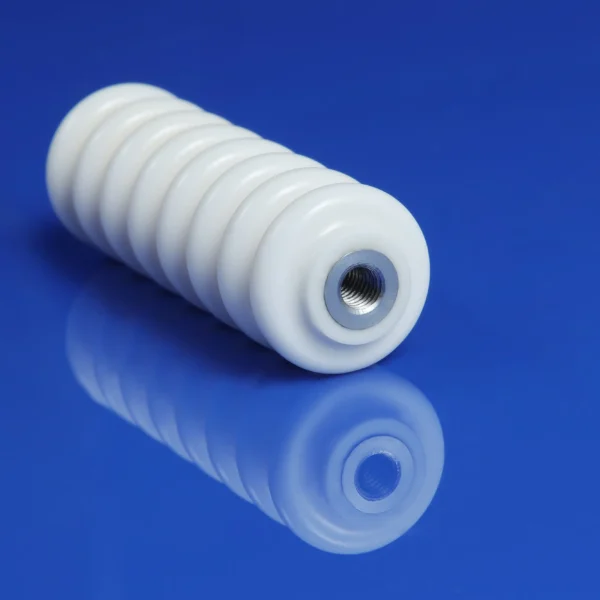
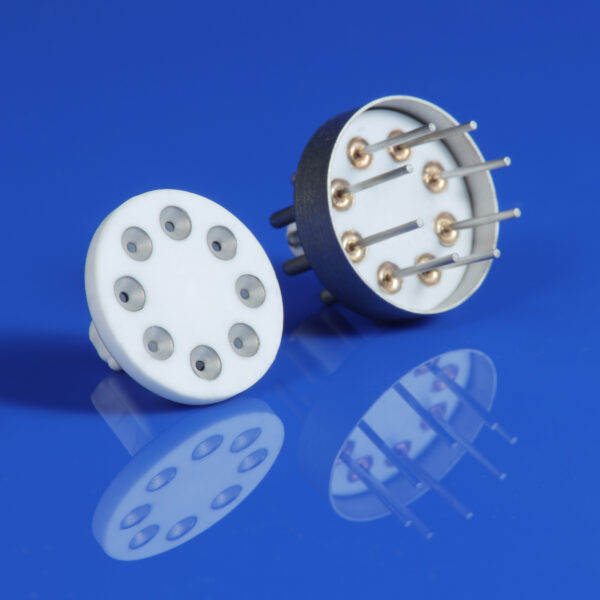
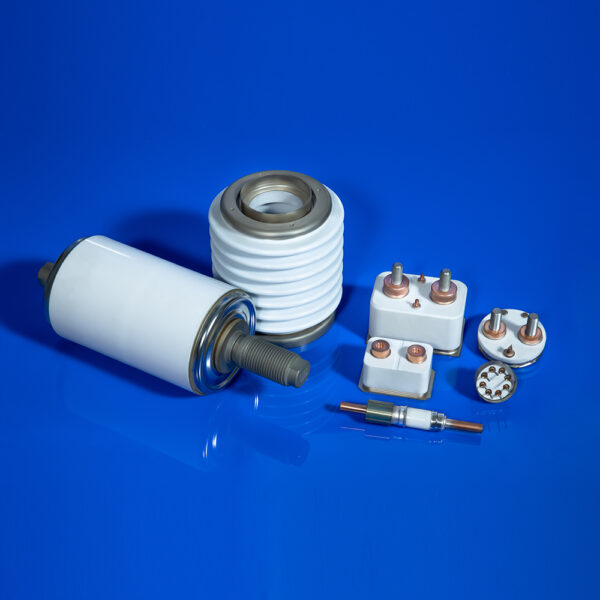
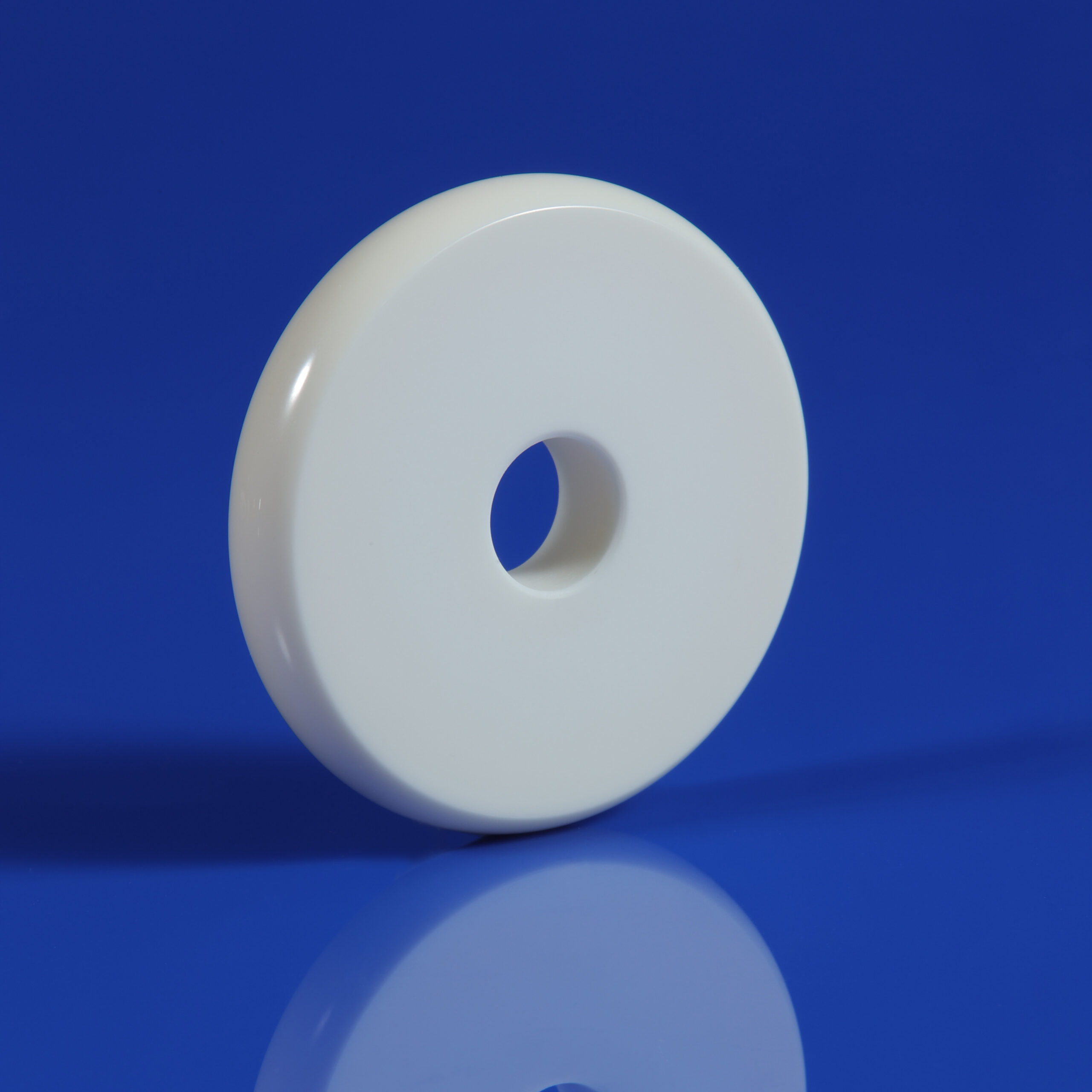
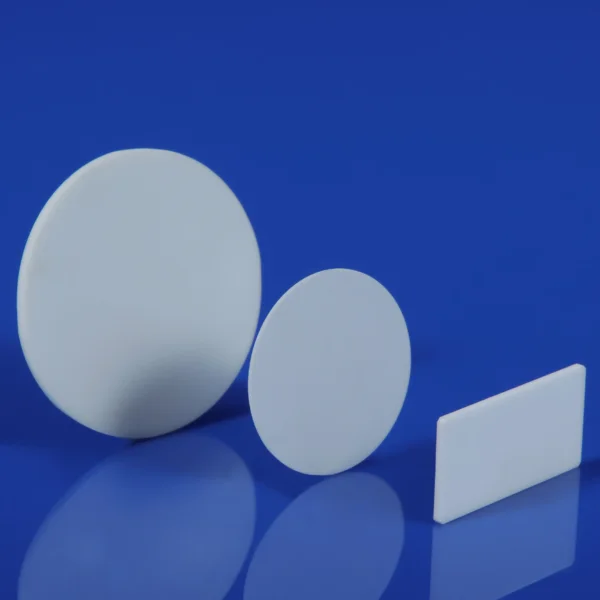
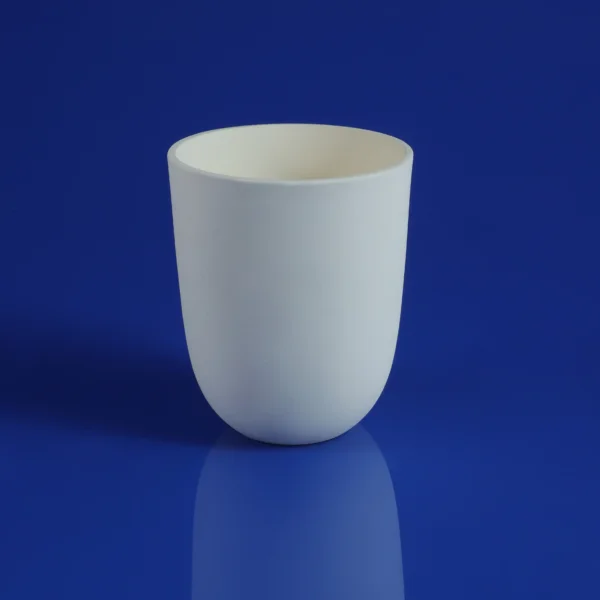
Metallized ceramic sealing (Metallized Ceramic / Ceramic-to-Metal Hermetic Seal) involves depositing a strong, adherent metal layer (typically molybdenum-manganese followed by nickel plating) on the surface of high-performance ceramics (such as alumina Al₂O₃ or aluminum nitride AlN) using advanced metallization processes (e.g., Mo-Mn method). This metallized ceramic is then reliably joined to metals (Kovar, NiFe alloys, stainless steel, copper alloys, etc.) through active brazing or vacuum brazing, creating high-reliability, vacuum-tight ceramic-to-metal composite assemblies.
Key Performance Advantages:
- Exceptional hermeticity: Helium leak rate ≤ 1×10⁻⁹ atm·cc/sec (some reaching 1×10⁻¹⁰ to 1×10⁻¹² Pa·m³/s)
- Superior insulation: Insulation resistance > 1 GΩ @ 100 VDC, withstand voltage > 10,000 psi
- Wide temperature range: Operating from -269°C to +800°C+ (depending on material combination)
- Outstanding mechanical & environmental resistance: High strength, abrasion resistance, corrosion resistance, thermal shock resistance, low dielectric loss
- Reliable bond strength: Tensile/shear strength ≥ 120–800 MPa
Typical Application Fields:
- Aerospace: High-voltage/high-temperature feedthroughs, vacuum electronic devices
- Medical: Implantable devices, X-ray tubes, precision probes
- Vacuum/Semiconductor: Mass spectrometers, RF/microwave components, laser systems
- Energy/Industrial: Gas detectors, oil & gas equipment, high-power electronic packaging
- Others: Particle accelerators, deep-sea sensors, extreme-environment instrumentation
Frequently Asked Questions
1.What is the maximum operating temperature?
Depending on material combination, typical operating temperatures reach 500–800°C or higher; special configurations support even greater temperatures.
2.What is the hermeticity standard?
Standard helium leak rate ≤ 1×10⁻⁹ atm·cc/sec; high-end products can achieve 1×10⁻¹⁰ to 1×10⁻¹² Pa·m³/s.
3.Do you offer customization and what are the lead times?
Yes, full customization is supported from single-pin to complex multi-pin designs. Prototype lead time is typically 4–8 weeks; production lead time varies by quantity.
Manufactured with advanced processes (precision cleaning → metallization sintering → nickel plating → assembly & brazing → helium leak & electrical testing), ensuring batch consistency and long-term reliability. Full customization is supported, from single-pin feedthroughs to complex multi-pin assemblies.
We deliver high-quality metallized ceramic hermetic sealing solutions to empower your projects in extreme environments and high-reliability applications!