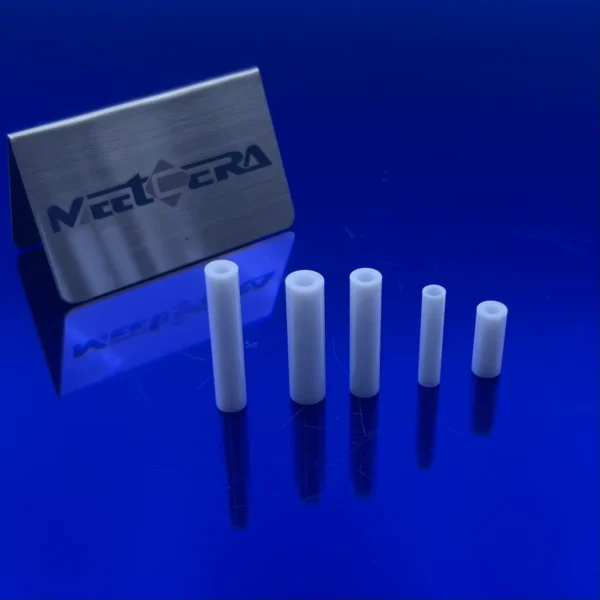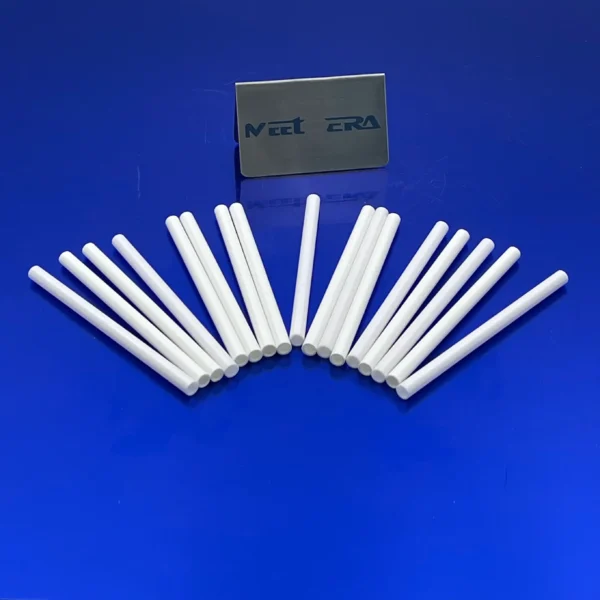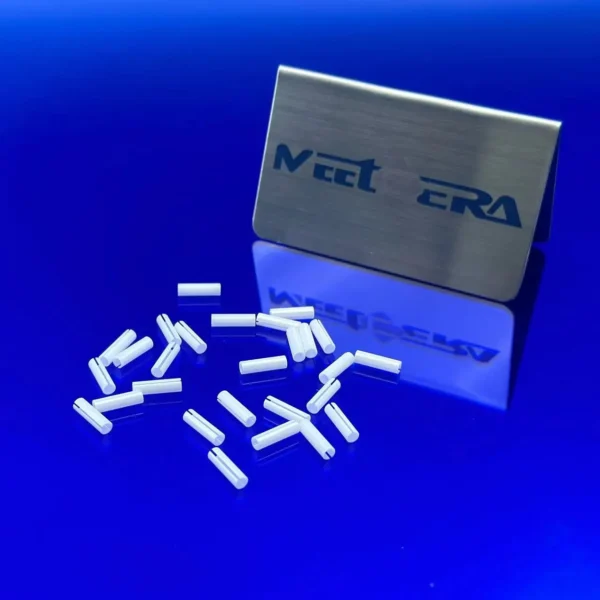
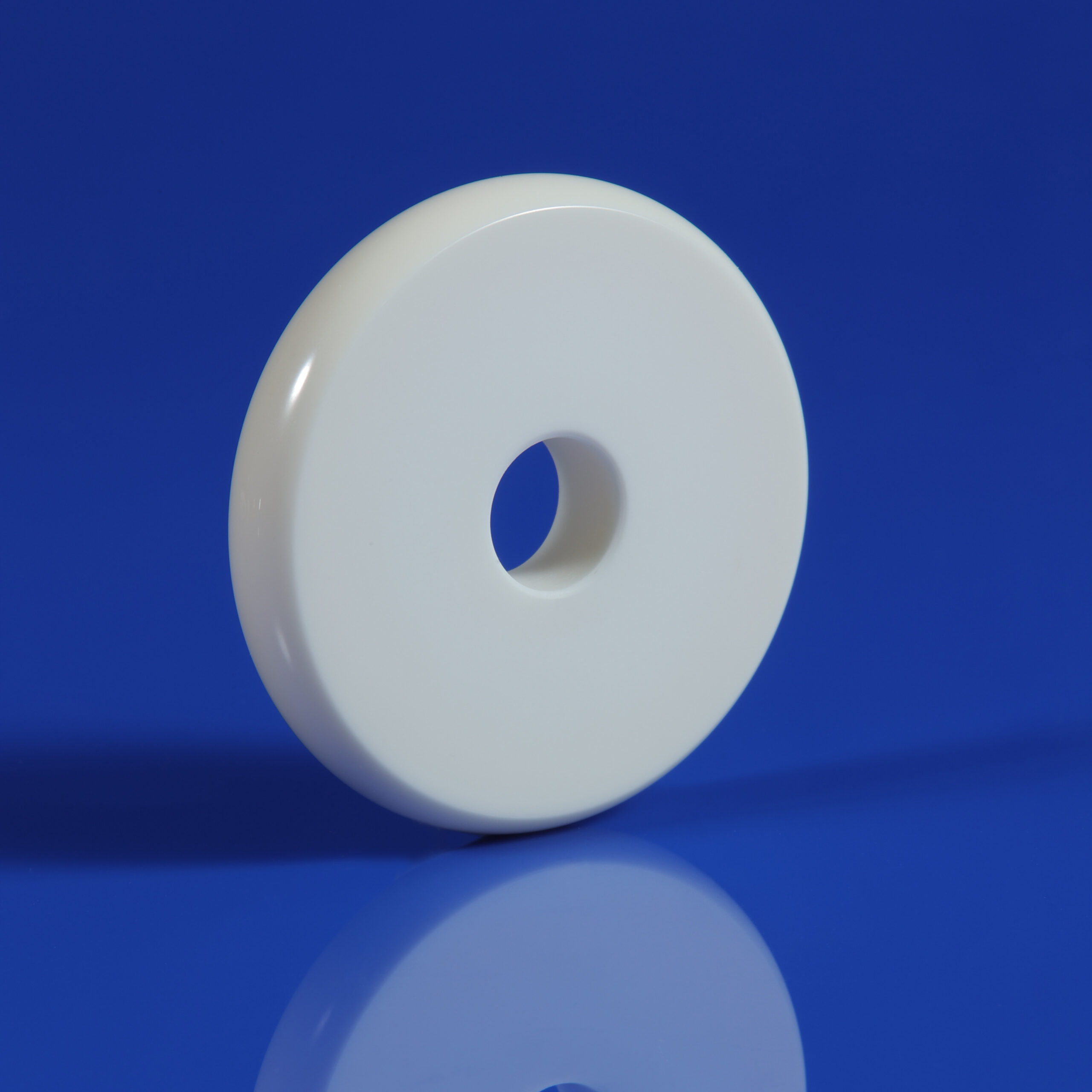
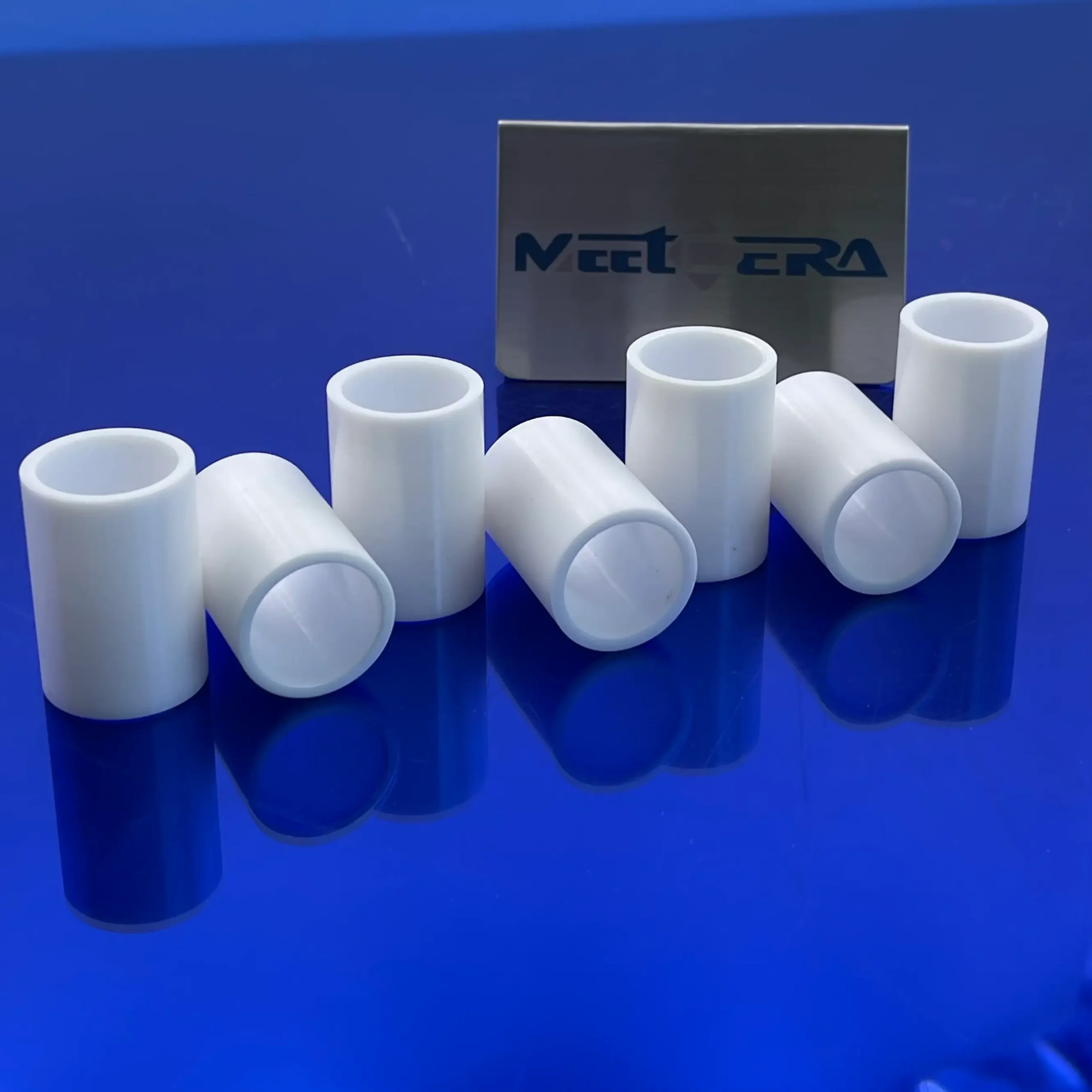
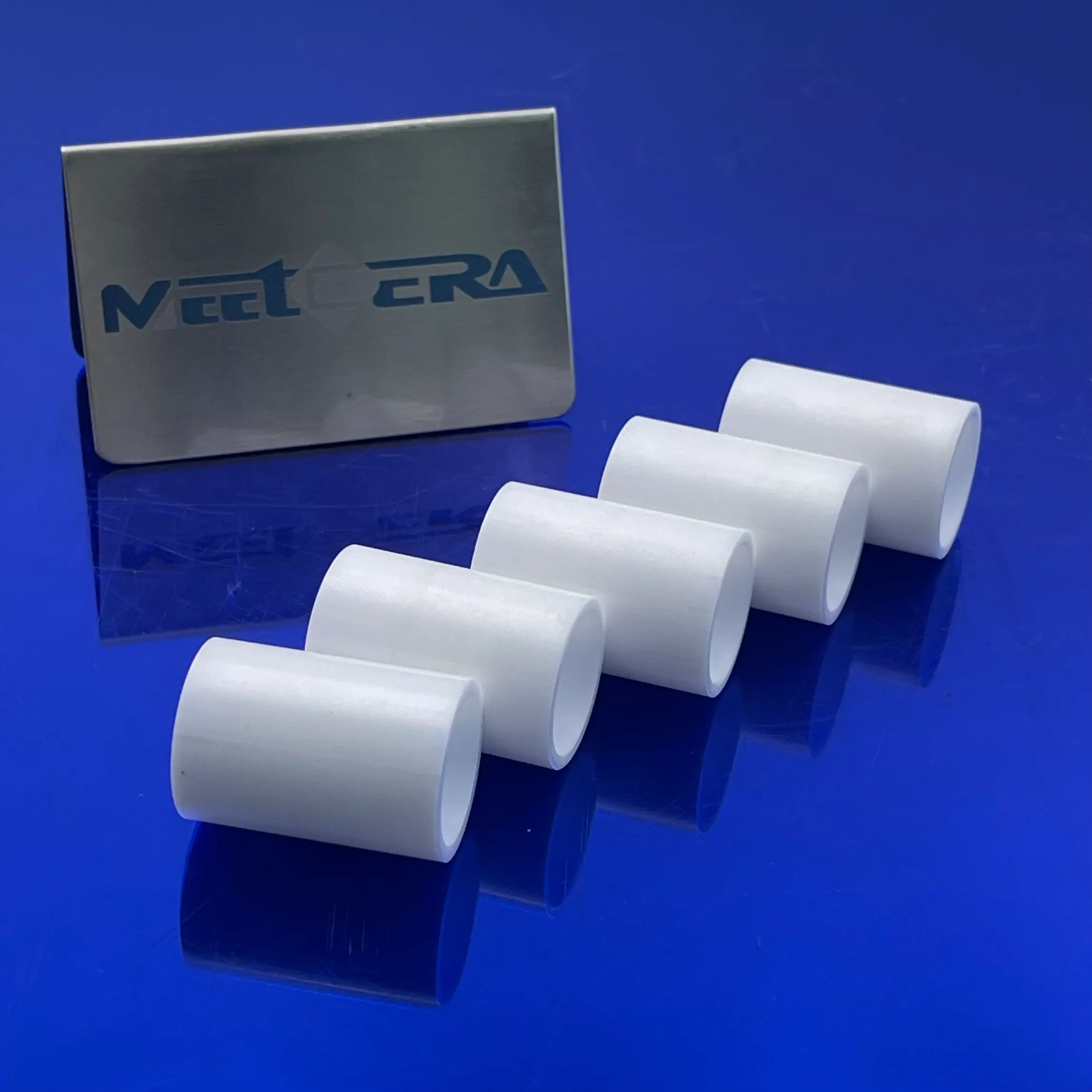
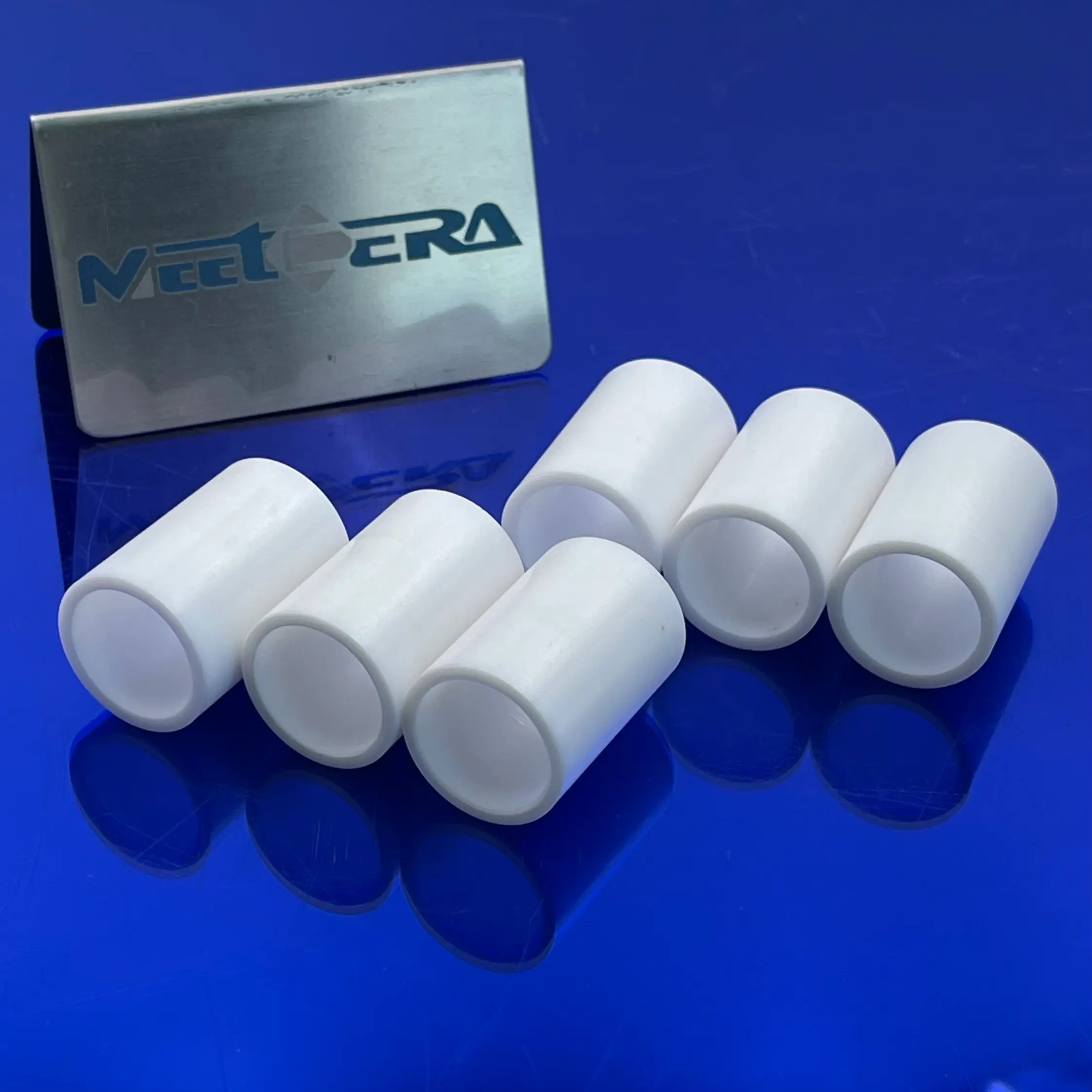
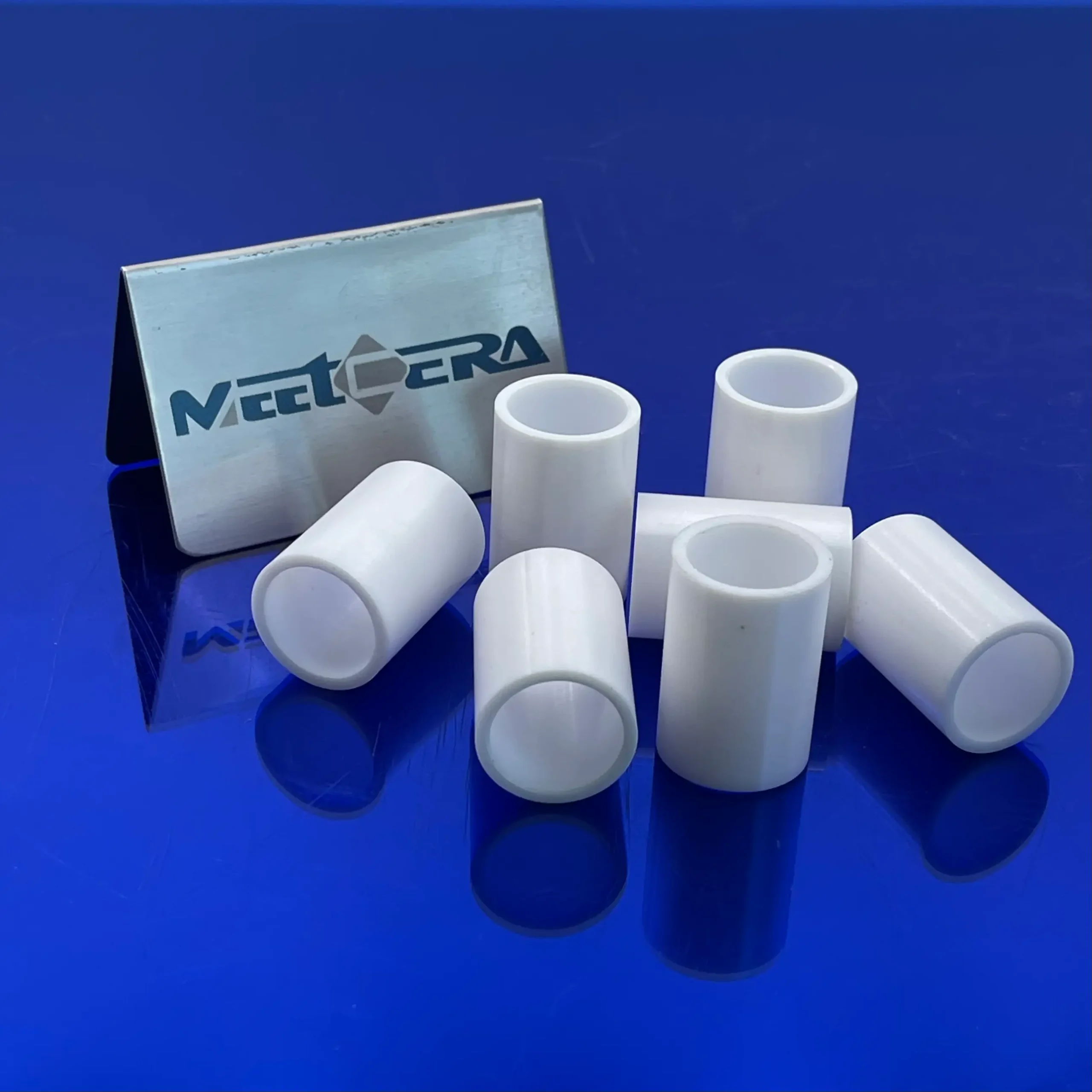
High-Performance Zirconia Ceramic Tube
Manufactured from premium yttria-stabilized zirconia (YSZ, ZrO₂ ≥ 99.5%) using advanced isostatic pressing, high-temperature sintering, and precision machining, Meetcera zirconia ceramic tubes deliver superior thermal stability, mechanical reliability, and contamination-free performance in extreme conditions.
Key Performance Highlights:
- Extreme high-temperature capability: Long-term use up to 1900–2000°C in air; 2100–2200°C in vacuum/inert atmospheres
- Outstanding fracture toughness & strength: Transformation toughening mechanism provides superior impact resistance compared to alumina
- Superior chemical & corrosion resistance: Inert to acids, alkalis, molten metals, and aggressive slags — minimal contamination
- Low thermal conductivity & excellent dimensional stability: Low expansion coefficient ensures reliability under thermal cycling
Typical Application Scenarios:
- Thermocouple protection sheaths and furnace tubes in high-temperature kilns, semiconductor diffusion, and polysilicon ingot furnaces
- Insulation and structural components in solid oxide fuel cells (SOFC) and oxygen sensors
- Precision liners, bushings, and fluid-handling tubes in chemical processing, petrochemical, and abrasive slurry environments
- High-temperature refractory supports, thermal barrier elements, and aerospace/automotive components
FAQ
Q1: Why zirconia tubes over alumina?
A: Higher max temperature (>2000°C), better toughness & impact resistance, superior chemical inertness, longer life in harsh conditions.
Q2: Key usage precautions?
A: Avoid thermal shock (ramp ≤5°C/min above 800°C); handle carefully to prevent chipping; use in controlled atmospheres for peak performance.