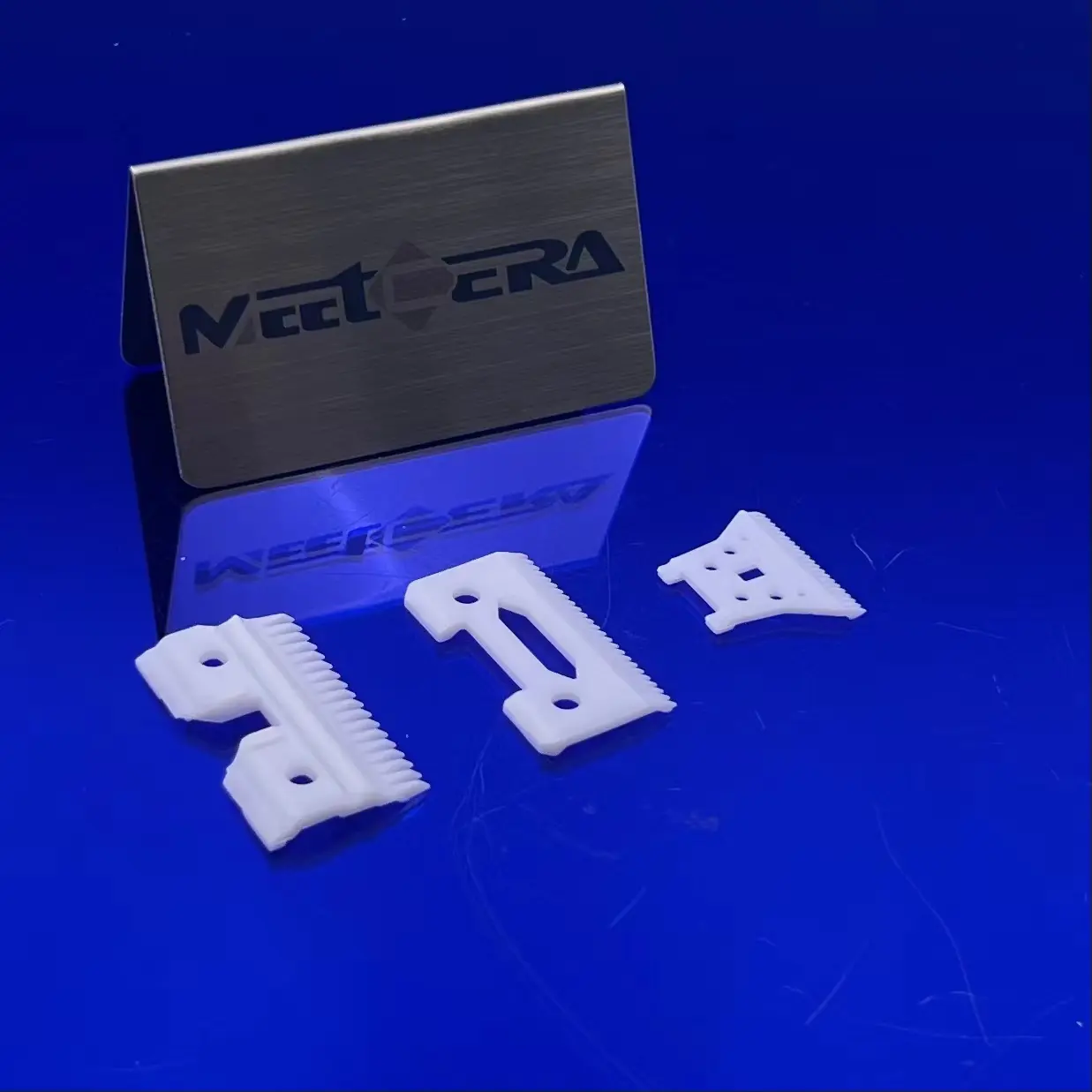
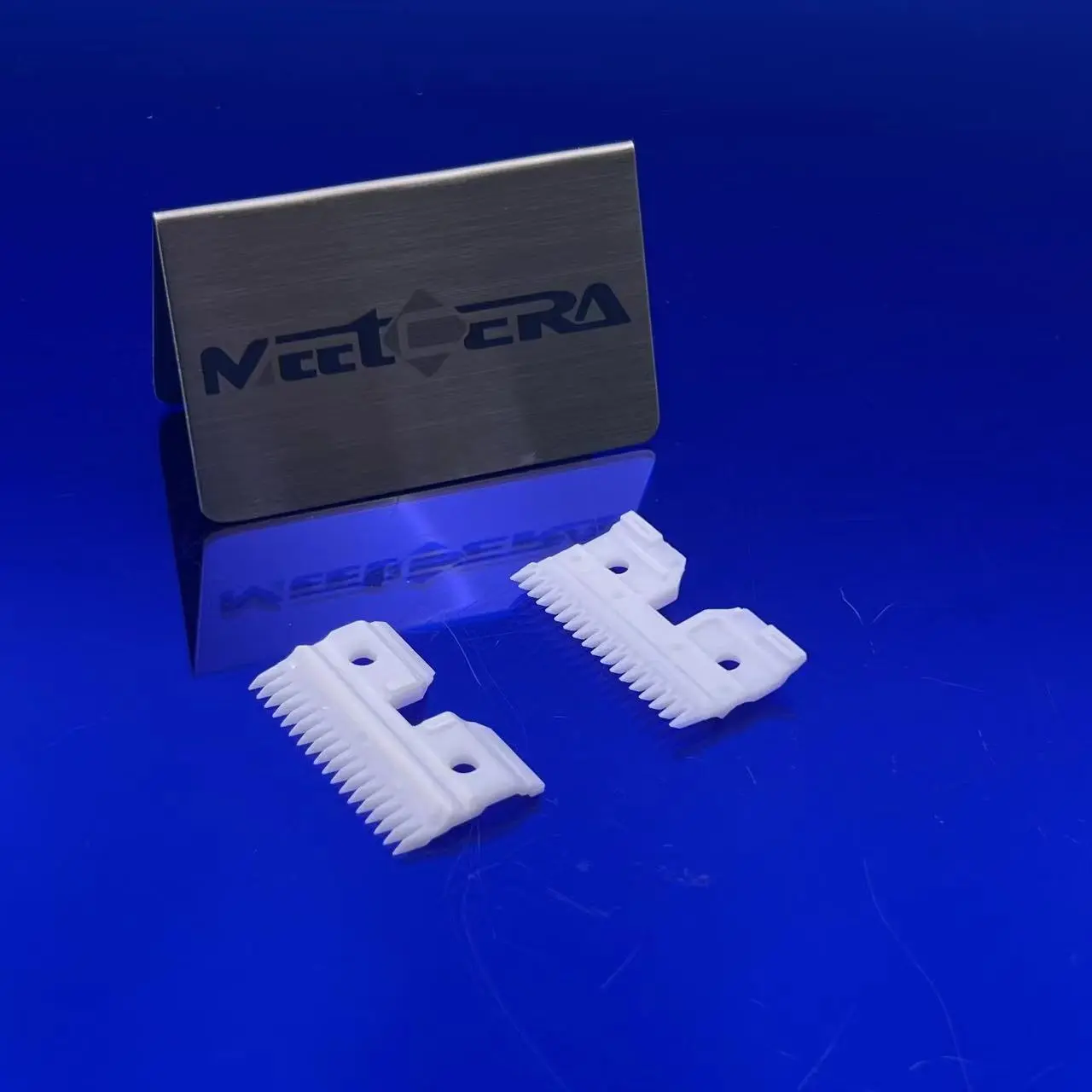
Zirconia Ceramic Blades
Made from high-purity using precision forming and high-temperature sintering processes, Meetcera zirconia ceramic blades are specifically engineered for demanding industrial environments, delivering exceptional sharpness, ultra-long service life, and outstanding corrosion resistance.
Key Features
- Ultra-High Hardness: Vickers hardness approx. 12–13 GPa, Mohs hardness ≈8.5–9, second only to diamond
- Ultra-Low Friction Coefficient: Smooth surface for minimal cutting resistance
- Non-Metallic & Non-Magnetic: Completely free of iron and non-conductive
- Superior Chemical Stability: Resistant to strong acids, alkalis, and corrosive media
Core Advantages
- Exceptional Sharpness & Extended Edge Retention Blades remain razor-sharp for extended periods, offering a service life typically 10–100 times longer than traditional steel blades, significantly reducing replacement frequency and downtime.
- Outstanding Corrosion & Wear Resistance Never rusts, no metal ion release, no off-odors — ideal for corrosive or clean environments without contamination risk.
- Smooth Cutting & High-Quality Finish Low-friction surface ensures clean cuts with no burrs or fraying when slitting plastic films, foils, fibers, and other materials, improving product quality and yield.
- High Strength & Fracture Toughness Transformation toughening mechanism provides steel-like toughness combined with ceramic hardness, enabling excellent performance under severe industrial wear and moderate impact.
Product Types
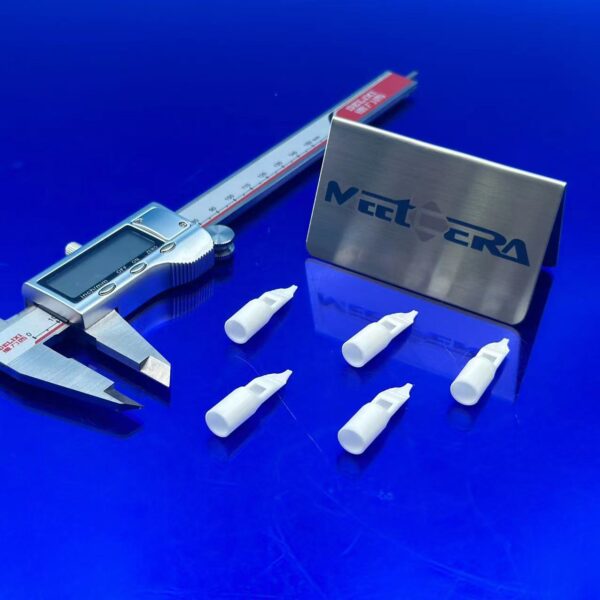
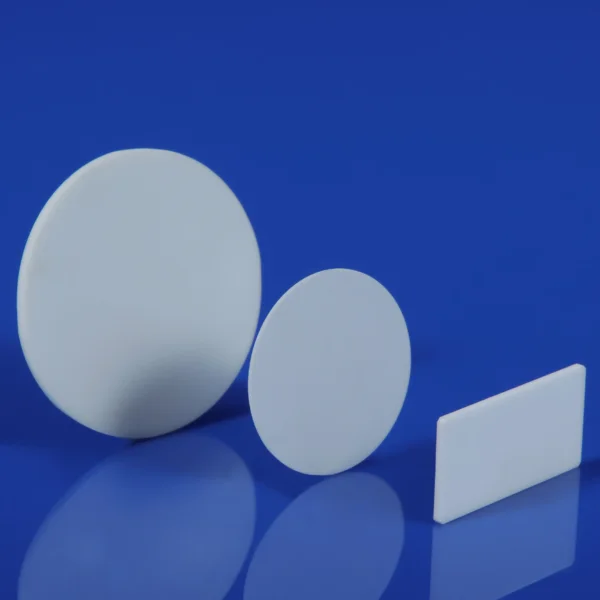
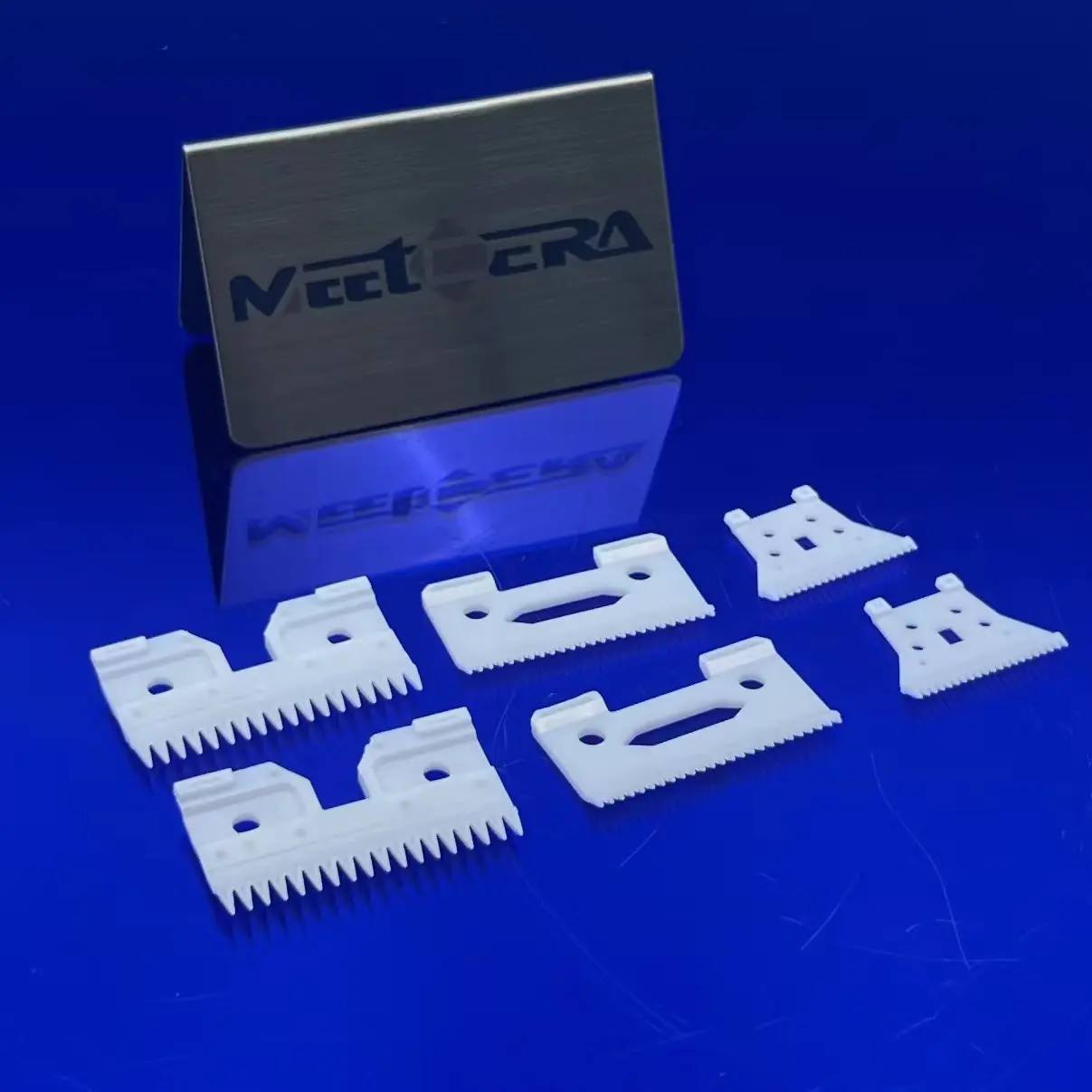
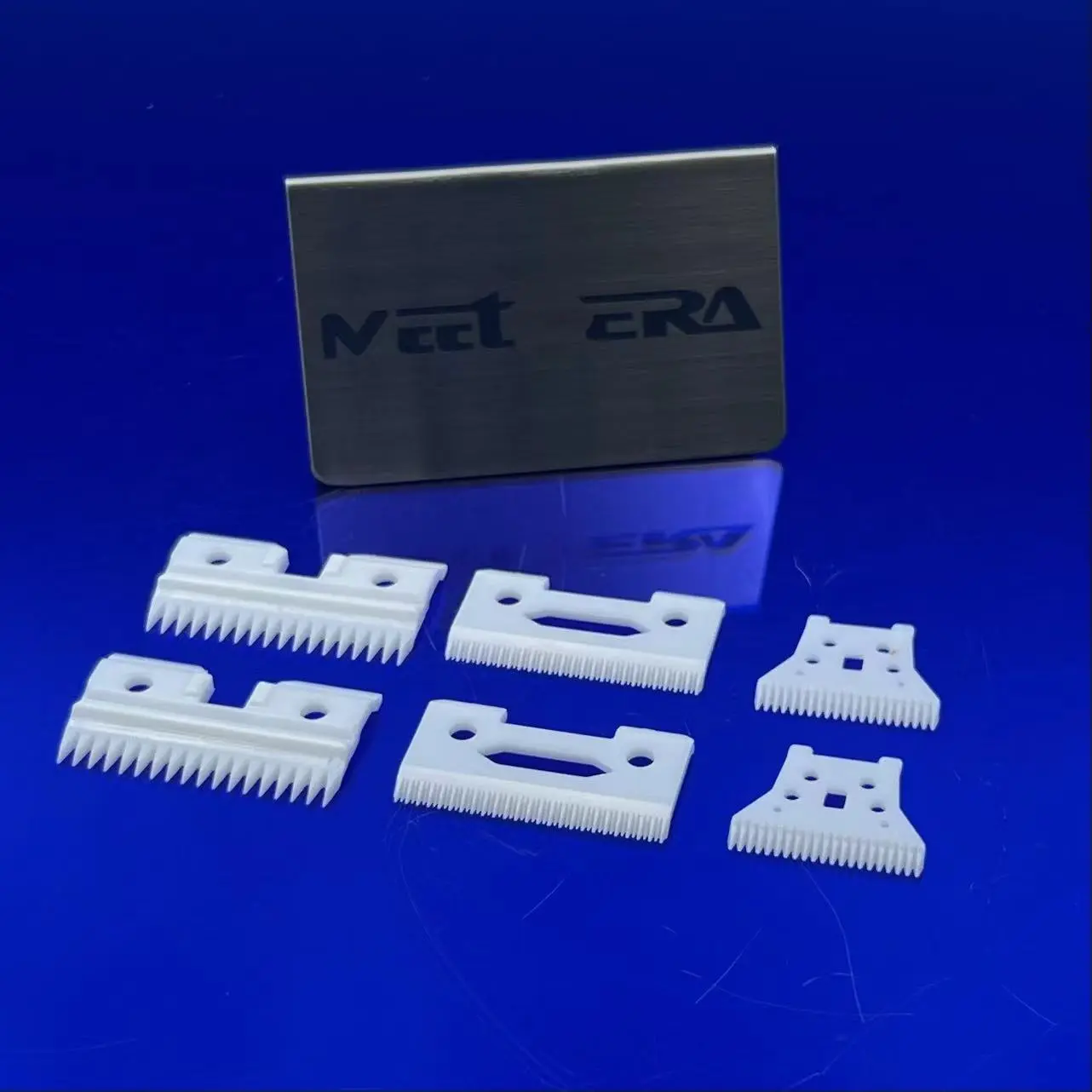
- Standard Series: Rectangular straight blades, circular rotary blades, trapezoidal blades, snap-off blades, deburring blades, etc.
- Pelletizing Blades: High-performance blades for granule cutting
- Slitting Blades: Low-friction blades optimized for films, foils, paper, and textiles
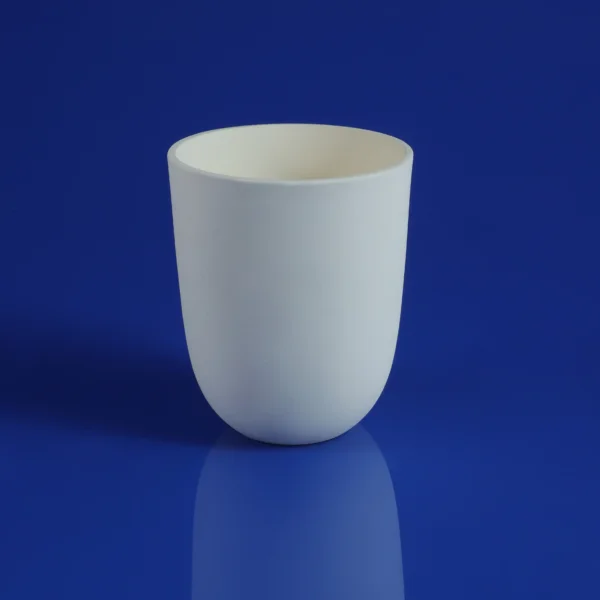
- Custom Series: Any shape, size, thickness, edge angle, color (white/black/blue), and surface finish
Typical Applications
- Pelletizing: Plastic, chemical, and food granule cutting
- Film & Foil Slitting: Plastic films, BOPP, aluminum foil, composite films
- Fiber & Textile Cutting: Synthetic fibers, non-woven fabrics, leather
- Paper & Printing: Precision slitting of labels and tapes
- Electronics & Medical Consumables: Circuit materials, medical packaging
- Aerospace & Composites: Carbon fiber prepreg and high-performance composites
- Replacement of metal blades in high-cleanliness, high-corrosion, or high-wear environments
FAQ
Q1: Can ceramic blades really last 10–100 times longer than steel blades?
A: Yes, when cutting soft to medium-abrasive materials (e.g., films, paper, fibers), service life is typically 10–100 times that of steel, depending on material, speed, and conditions. Avoid cutting hard or high-impact objects.
Q2: Are ceramic blades prone to breaking?
A: Thanks to transformation toughening, toughness far exceeds ordinary ceramics, but they remain brittle. Avoid heavy impacts, drops, lateral prying, or cutting metal/bone/hard objects to minimize fracture risk.
Q3: Can ceramic blades be resharpened?
A: Due to extreme hardness, standard grinding wheels are ineffective. We recommend direct replacement (long life makes this more cost-effective overall). Professional regrinding is available upon request.