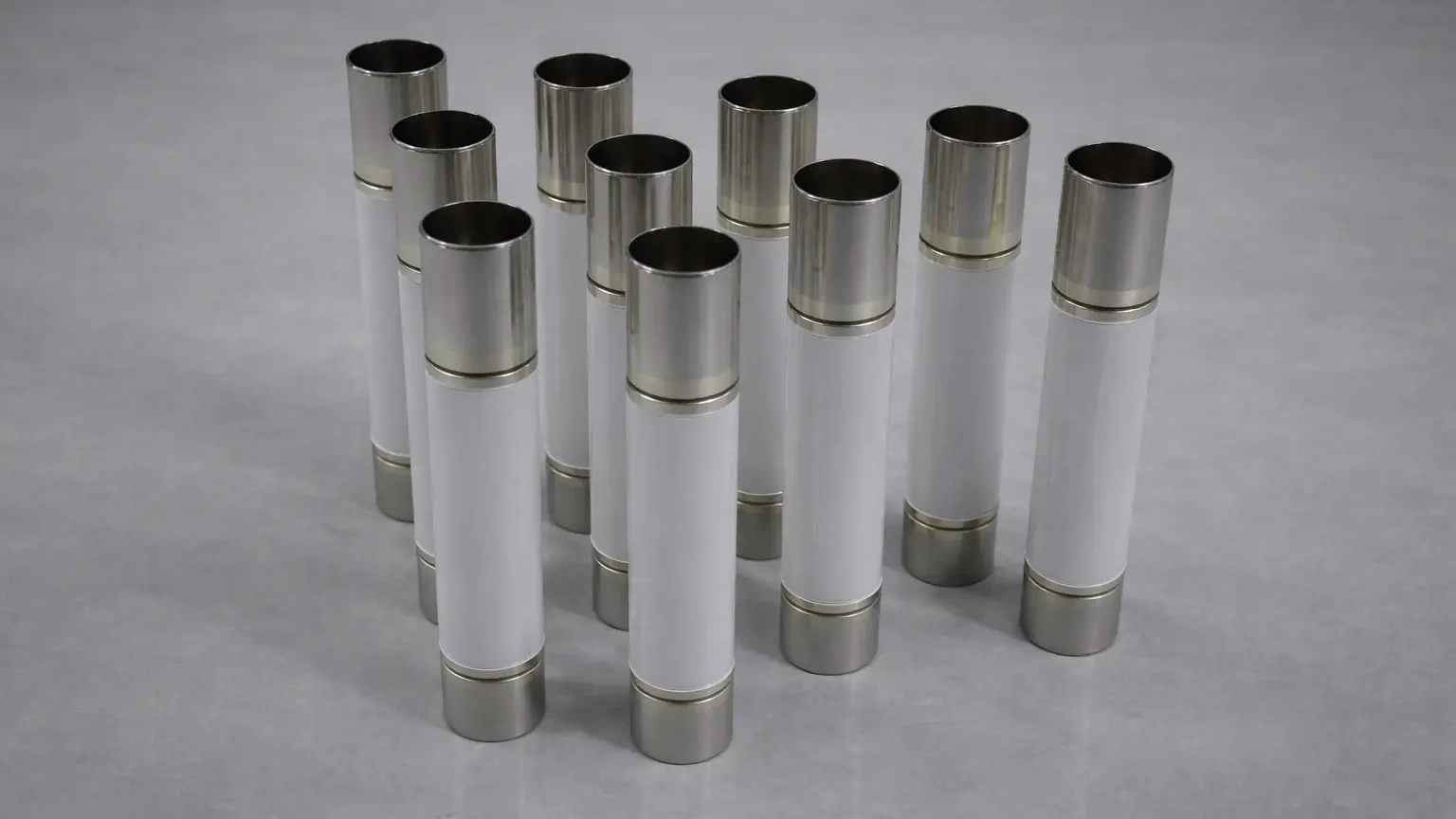
Vacuum Ceramic Brazing Cases: Radar Satellite Accelerator
Theoretical processes must ultimately be implemented in real equipment. As the fourth and final article in this series, this piece showcases the engineering applications of ceramic brazing in vacuum electron devices through typical cases in radar, satellite communications, and particle accelerators, with a on outgassing rate testing and long-term vacuum stability evaluation.
1.Typical Application Case Analysis
- Radar Systems: High-power microwave tube ceramic windows and feedthroughs must withstand peak power pulses and thermal shocks. Alumina brazing solutions can achieve thousands of hours of stable operation.
- Satellite Communications: Traveling wave tube amplifier ceramic feedthroughs and collector components require over 20 years of on-orbit life and high-reliability vacuum seals. Aluminum nitride solutions offer superior advantages in thermal management and RF performance.
- Particle Accelerators: Klystron high-power RF source ceramic metallized components must adapt to continuous-wave high-gradient fields. Low-loss multi-layer feedthrough technology has been successfully applied in large scientific facilities.
2.Outgassing Rate and Long-Term Vacuum Stability Testing
Outgassing is a core factor affecting vacuum life:
- Testing methods: Temperature-ramped outgassing test, residual gas analysis (RGA), mass spectrometry detection
- Influencing factors: Ceramic purity, brazing residues, surface adsorption
- Long-term evaluation: Accelerated aging tests (high-temperature baking + thermal cycling), actual device life verification
Improvement strategies include selecting high-purity materials, optimizing baking processes, and combining getters, which can reduce outgassing rates to meet aerospace-grade requirements.
3.Conclusion and Outlook
Ceramic brazing in vacuum electron devices technology has evolved from basic hermeticity assurance to comprehensive optimization for high-frequency low-loss and long-life reliability. Current bottlenecks include large-scale multi-layer feedthroughs and millimeter-wave applications. Future directions involve novel ceramics (e.g., Si₃N₄), digital simulation-assisted processes, and intelligent manufacturing.
Thank you for reading ! If you have specific project needs in ceramic brazing, traveling wave tube feedthroughs, or klystron metallization, feel free to leave contact us for discussion.
FAQ
Q.What is the typical life requirement for traveling wave tube ceramic feedthroughs in satellite communications?
Aerospace-grade usually requires 15–20+ years of on-orbit operation, verified through accelerated aging tests.
Q.What are the most critical residual gases in outgassing rate testing?
Hydrogen (H₂), water vapor (H₂O), carbon monoxide (CO), and carbon dioxide (CO₂) are the most common outgassing sources and must be strictly controlled.
Q.What is the greatest challenge for ceramic brazing in particle accelerator klystrons?
Under continuous-wave high-gradient fields, extremely low RF loss and ultra-high long-term vacuum stability are required, while withstanding extremely high thermal loads.