How Does Ceramic-to-Metal Brazing Work? Ceramic-to-metal brazing is widely used to create strong, hermetic connections between ceramic insulators and metal components. However, ... Read More
What Causes Helium Leak Failures in Ceramic-to-Metal Hermetic Seals Under Vacuum? A ceramic-to-metal seal may pass visual inspection but still fail helium ... Read More
How to Test the Hermeticity of Your Ceramic to Metal Seals? Introduction In high-reliability applications—ranging from aerospace sensors and vacuum-feedthroughs to advanced ... Read More
How to Prevent CTE Mismatch in Metallized Ceramic Assemblies In metallized ceramic assemblies, reliability is often determined by how well different materials ... Read More
Mo-Mn vs. Active Metal Brazing: Which Metallization Process Is Best for You? 1. Introduction In modern electronics and high-reliability applications, the choice ... Read More
Ceramic-to-Metal vs. Glass-to-Metal Sealing: Which Hermetic Solution Fits Your Project? When designing high-reliability systems for vacuum, aerospace, or medical applications, engineers must ... Read More
Brazing Solutions for High-Radiation Ceramic Insulators Nuclear fusion devices, such as ITER and future DEMO reactors, present the most hostile environments for ... Read More
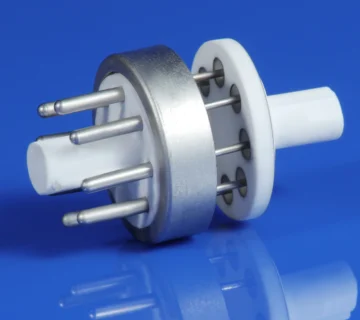
TWT Ceramic Feedthrough Brazing: Multi-Pin Multi-Layer Guide Traveling wave tubes (TWT) serve as core amplifiers in satellite communication and radar systems, where ... Read More