
The 5 Critical Factors Causing Ceramic Capacitor Explosions
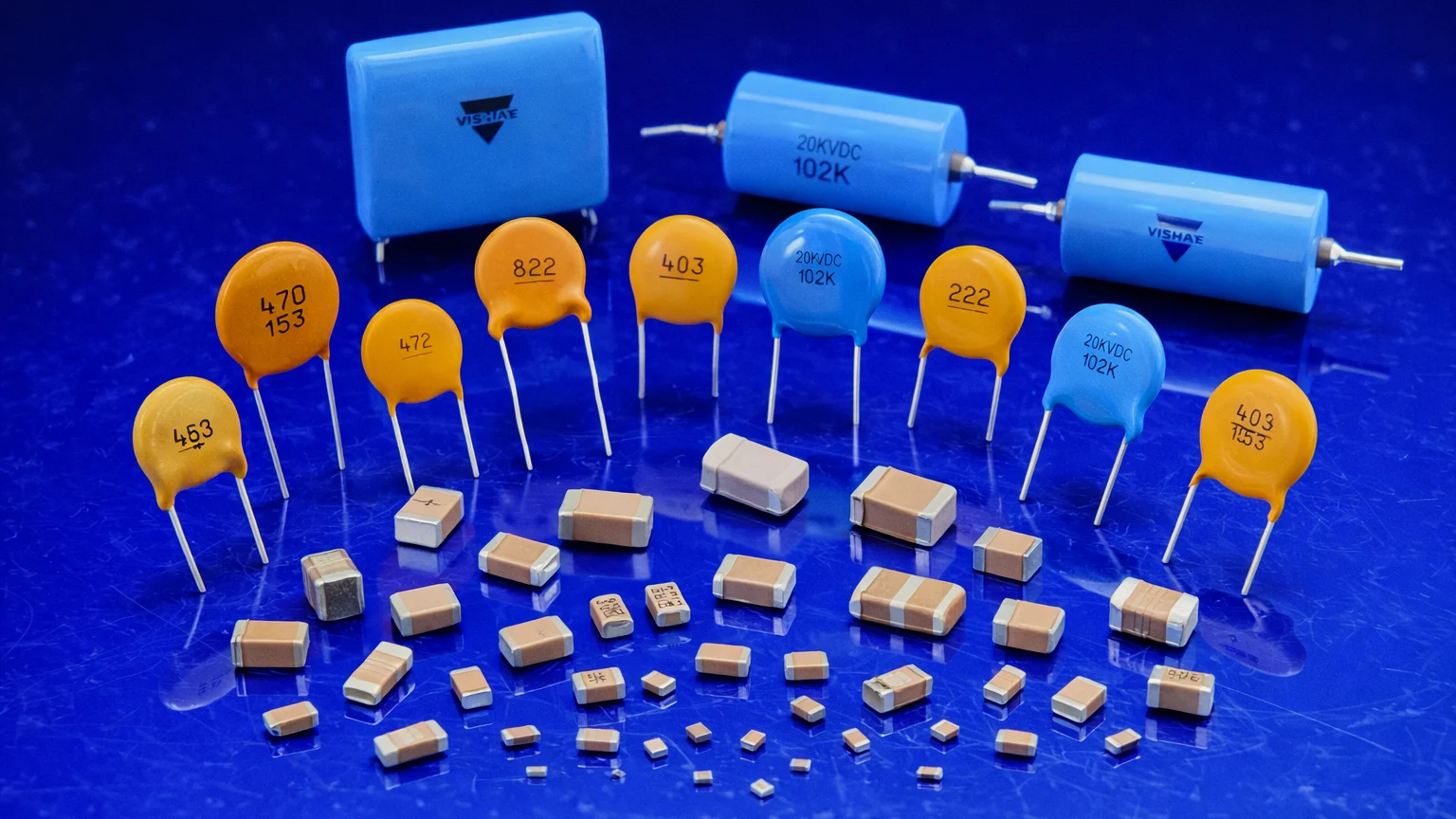
Ceramic capacitors (especially MLCCs) are key in modern electronics due to their small size, high capacitance, and reliability. They can fail via cracking, shorting, overheating, or—in rare cases—a “pop” or micro-rupture. Unlike electrolytic capacitors, true explosions are uncommon; “explosion” usually means rapid fragmentation from breakdown energy release.
Industry data (NASA, Murata, TDK) show cracking as the top failure mode in aerospace, automotive, and consumer devices. This article ranks the 5 main causes and prevention tips to boost circuit reliability.
| Rank | Factor | Main Cause | Why It Fails | Prevention Tips |
|---|---|---|---|---|
| 1 | Mechanical Stress / Flex Cracking | PCB bend, vibration, handling | Cracks → short, leak, overheat | Soft termination, better PCB layout, damping |
| 2 | Thermal Stress / Shock | High temp, thermal cycling, ripple | Expansion mismatch → cracks, aging | High-temp rating, cooling, low-ESR |
| 3 | Overvoltage | Exceeds rated voltage | Dielectric breakdown → arc, rupture | 50% derating, TVS diodes, testing |
| 4 | Manufacturing Defects | Voids, impurities, poor quality | Weak spots → early failure | Reputable suppliers, incoming inspection |
| 5 | Transients / Surges | ESD, switching spikes | Instant overload → breakdown, micro-pop | MOV/TVS, better filtering & grounding |
1. Mechanical Stress / Flex Cracking
This is the leading cause of MLCC failures, as highlighted in NASA studies and Murata's technical articles. Ceramic materials are inherently brittle, like glass, and can develop micro-cracks when the PCB flexes during installation, operation, or even depaneling. These cracks often start at the terminations and propagate inward, allowing moisture ingress that reduces insulation resistance and causes shorts. In extreme scenarios with high power, this can result in overheating, smoke, or a popping sound.
For example, in automotive or aerospace applications, vibration exacerbates this issue. A NASA report notes that flex cracks are responsible for up to 80% of low-voltage MLCC failures in space electronics.
Prevention Tip: Opt for "soft termination" or "open mode" capacitors, which absorb stress better. EEVblog demonstrations show how simple PCB design changes, like orienting capacitors parallel to board edges, can reduce risks.
2. Thermal Stress / Shock
Heat is a silent killer for ceramics. Prolonged exposure to high ambient temperatures or self-heating from high ripple currents causes thermal expansion mismatches between the ceramic dielectric and metal electrodes, leading to cracks or delamination. This accelerates aging, with silver ion migration in some dielectrics worsening insulation over time. In power supplies, rapid thermal cycling (e.g., soldering or operation) can induce thermal shock cracks.
Industry data from AIC Tech indicates that cumulative thermal damage follows a "bathtub curve," with early failures from defects and wear-out from long-term heat.
Prevention Tip: Use capacitors rated for extended temperatures (e.g., X7R or X8R types) and model thermal profiles during design. Proper ventilation and low-ESR selections minimize self-heating.
3. Overvoltage / Dielectric Breakdown
Exceeding the rated voltage causes dielectric breakdown, where the insulating ceramic fails, allowing current to arc through. This generates intense heat, potentially shattering the body in a rupture—though true explosions are rare without sustained power. RoodMicrotec reports that this often stems from underrated components in high-voltage circuits.
Prevention Tip: Always derate voltage by 20-50% and incorporate overvoltage protection. Testing per AEC-Q200 standards ensures robustness.
4. Manufacturing Defects
Flaws like voids, impurities, or inconsistent electrode layering weaken the structure, making capacitors prone to early failure under stress. Counterfeit or low-quality parts amplify this, as seen in Utmel analyses.
Prevention Tip: Buy from trusted suppliers with traceability. Conduct sample testing, including X-ray inspections for voids.
5. Transients / Power Surges
Sudden voltage spikes from ESD or switching can overwhelm the dielectric instantly, leading to ionization and breakdown. In rare cases, this causes a micro-explosion if energy discharge is rapid.
Prevention Tip: Use transient suppressors and surge-rated MLCCs. Improve system grounding to mitigate spikes.
Conclusion
Understanding these failure modes empowers engineers to design more reliable circuits. By prioritizing mechanical and thermal protections, sourcing quality parts, and applying deratings, you can minimize risks. For high-stakes applications like aerospace, refer to NASA guidelines for advanced testing. Regular inspections and failure analysis can catch issues early, extending device lifespan.
FAQ
- Do ceramic capacitors really explode?
Rarely; most "explosions" are pops from cracking and shorting, not chemical blasts like electrolytics. - How can I detect cracks in MLCCs?
Use acoustic microscopy, X-ray, or electrical testing for insulation resistance drops. - What's the difference between flex cracking and thermal cracking?
Flex is mechanical (PCB bend), thermal is heat-induced expansion.