
Solving Pt-Ir Pin Soldering Issues on Ceramic Feedthroughs to FPC
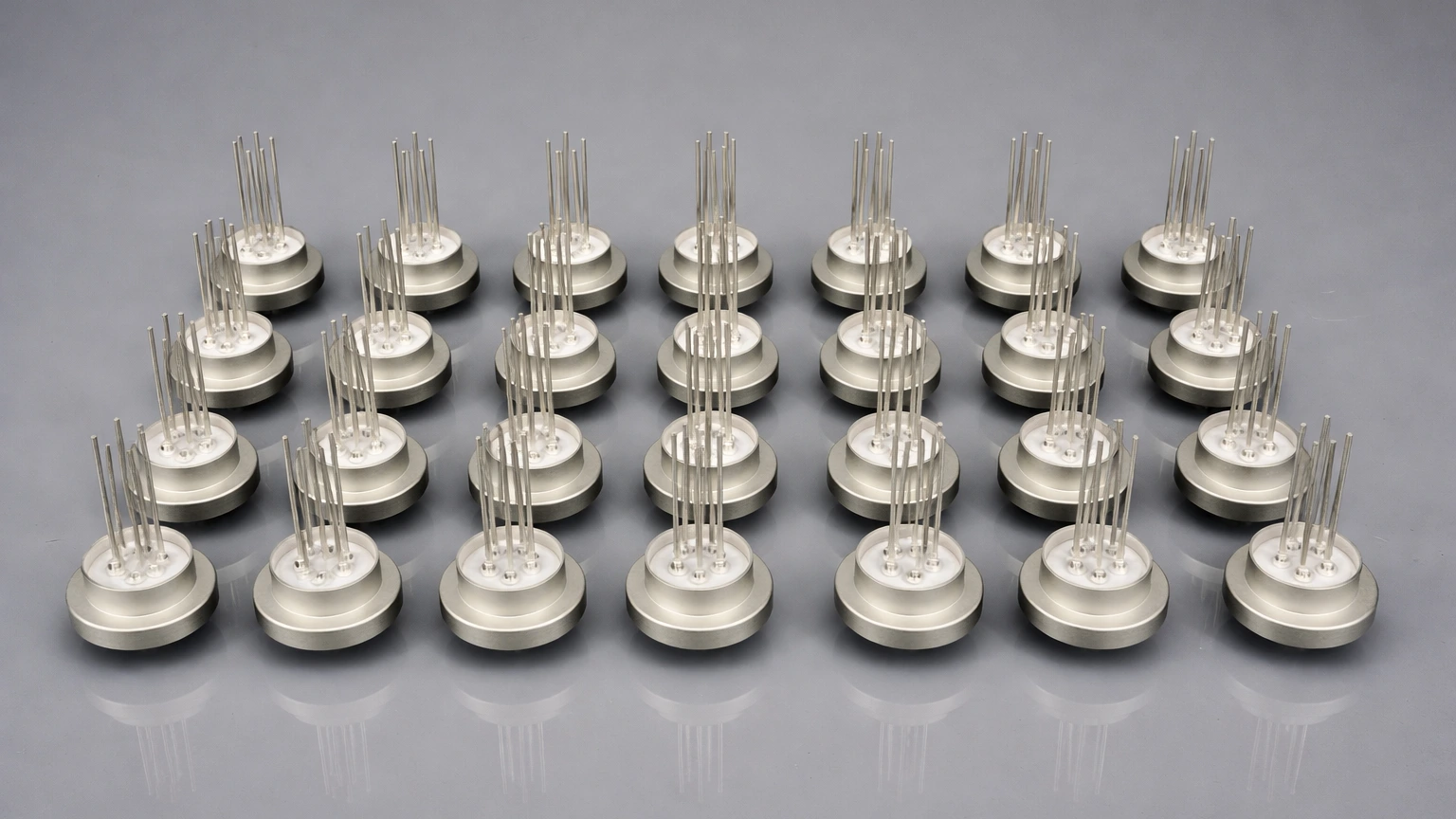
In implantable devices like neurostimulators and pacemakers, ceramic feedthroughs with platinum-iridium (Pt-Ir) alloy pins are essential for reliable signal transmission. Soldering these pins to FPC pads often fails due to poor wettability, cold joints, and thermal-stress cracking of the ceramic. These remain key challenges in 2026 medical electronics assembly. This guide explains the problems and offers practical ways to lower the soldering failure rate of Pt-Ir pins on ceramic feedthroughs to FPC pads.
1.Why Are Platinum-Iridium Alloy Pins So Difficult to Solder?
Platinum-iridium alloy (typically Pt/Ir 80/20 or 90/10) is widely used for medical implantable ceramic feedthrough signal pins due to its excellent biocompatibility, corrosion resistance, and conductivity. However, it presents three inherent soldering challenges:
- High Melting Point and Poor Wettability: Melting point >1700–1800°C vs. tin-based solders ~180–220°C, leading to poor spreading or balling.
- Dense Surface Oxide Layer: Blocks metallurgical bonding even in inert atmospheres, causing cold joints.
- Thermal Stress Impact on Ceramic Feedthrough Cracking: CTE mismatch (ceramic ~7–8 × 10⁻⁶/K, Pt/Ir ~8–9 × 10⁻⁶/K, polyimide FPC 20–50 × 10⁻⁶/K) generates stress that can crack the ceramic body or compromise hermeticity.
These factors make post-assembly of implantable medical ceramic feedthroughs high-risk. For further reading on hermetic packaging challenges, see: Technology Advances and Challenges in Hermetic Packaging for Implantable Medical Devices.
2.Solutions Comparison: Three Mainstream Process Approaches
Here is a more concise comparison of the three primary approaches for soldering platinum-iridium alloy pins on ceramic feedthroughs to FPC pads:
| Approach | Core Method | Main Advantage | Main Drawback | Best For | Target Shear Strength |
|---|---|---|---|---|---|
| Pretreatment + Reflow | Ni/Au plating + laser heating | SMT-compatible, balanced cost | Needs thermal control | Most medical assemblies | ≥10–15 MPa |
| Active Brazing | Au/Ag filler + vacuum furnace | Strongest bond & durability | High temp risks part damage | Extreme environments | ≥20 MPa |
| Conductive Adhesive | Silver adhesive (cure 120–150°C) | No thermal stress | Lower strength & conductivity | Heat-sensitive applications | ≥5–8 MPa |
Recommended Path: For most implantable neurostimulator ceramic feedthrough applications, choose Approach 1 (pre-plating + laser-assisted soldering) for the best balance of reliability, cost, and minimal thermal damage. Laser techniques are widely used in medical Pt/Ir welding—see: Laser Welding in Medical Device Manufacturing.
- Key Pretreatment: Plate Ni (2–5μm) + flash Au (0.1–0.5μm), or laser activate surface to reduce contact angle from >90° to <30°.
- Reflow Optimization: SnAgCu paste, peak 235–245°C, dwell 60–90s, ramp ≤3°C/s, cool ≤4°C/s.
3.Case Study: Successful Soldering in Implantable Neurostimulator
Initial reflow attempts yielded 35% cold joints and 8% ceramic cracking. Optimized process:
- Pre-plate Ni/Au (3μm Ni + 0.3μm Au).
- High-activity flux on FPC pads.
- 1064nm laser heating (4–6W, 2s pulses).
- Nitrogen cooling.
Outcome: Cold joint rate <2%, shear strength 12.5 MPa average, no cracks after 500 thermal cycles (-40°C to 85°C). Enabled stable production and import substitution.
4.Testing and Validation Methods
Essential post-soldering checks:
- Shear Strength: IPC-TM-650, target ≥10 MPa (medical ≥12 MPa). See method: IPC-TM-650 Test Methods.
- X-Ray Inspection: Void rate <25%, no bridging/cracks.
- Thermal Cycling: JEDEC JESD22-A104, -55°C to 125°C (1000 cycles), resistance change <5%, helium leak <1×10⁻⁹ Pa·m³/s. Full standard: JEDEC JESD22-A104.
These form the gold standard for platinum-iridium alloy pin soldering reliability on ceramic feedthroughs.
5.Supplier Selection Recommendations
Prioritize suppliers that:
- Offer pre-plating (Ni/Au) for Pt/Ir pins.
- Provide wettability & shear strength reports.
- Support sample validation + accelerated life testing.
- Hold ISO13485 and understand implantable medical ceramic feedthrough requirements.
6.Conclusion: Key Techniques to Minimize Failure Rates
Resolve soldering difficulties with platinum-iridium alloy pins on ceramic feedthroughs to FPC pads using:
- Mandatory surface modification (plating or laser activation).
- Localized laser heating to reduce thermal stress and ceramic feedthrough cracking.
- Batch testing: shear + X-ray + thermal cycling.
These steps can keep implantable medical ceramic feedthrough soldering failure rates below 1%. Contact us for platinum-iridium alloy pin soldering optimization solutions or sample testing support to upgrade your medical electronics reliability!