
Ceramic-to-Metal vs. Glass-to-Metal Sealing: Which Hermetic Solution Fits Your Project?
When designing high-reliability systems for vacuum, aerospace, or medical applications, engineers must choose a sealing technology that guarantees long-term hermeticity. The two primary contenders are Glass-to-Metal Seals (GTMS) and Ceramic-to-Metal Seals (Ceramic Feedthroughs).
While both serve the purpose of electrical isolation and environmental sealing, their performance envelopes differ significantly.
1. Understanding the Fundamentals
A.Glass-to-Metal Seals (GTMS)
GTMS relies on melting glass preforms to wet the metal surfaces of the pin and the housing. As the glass cools, it forms either a matched seal (chemical bond) or a compression seal (mechanical bond). This technology is widely used in standard sensors and commercial connectors.
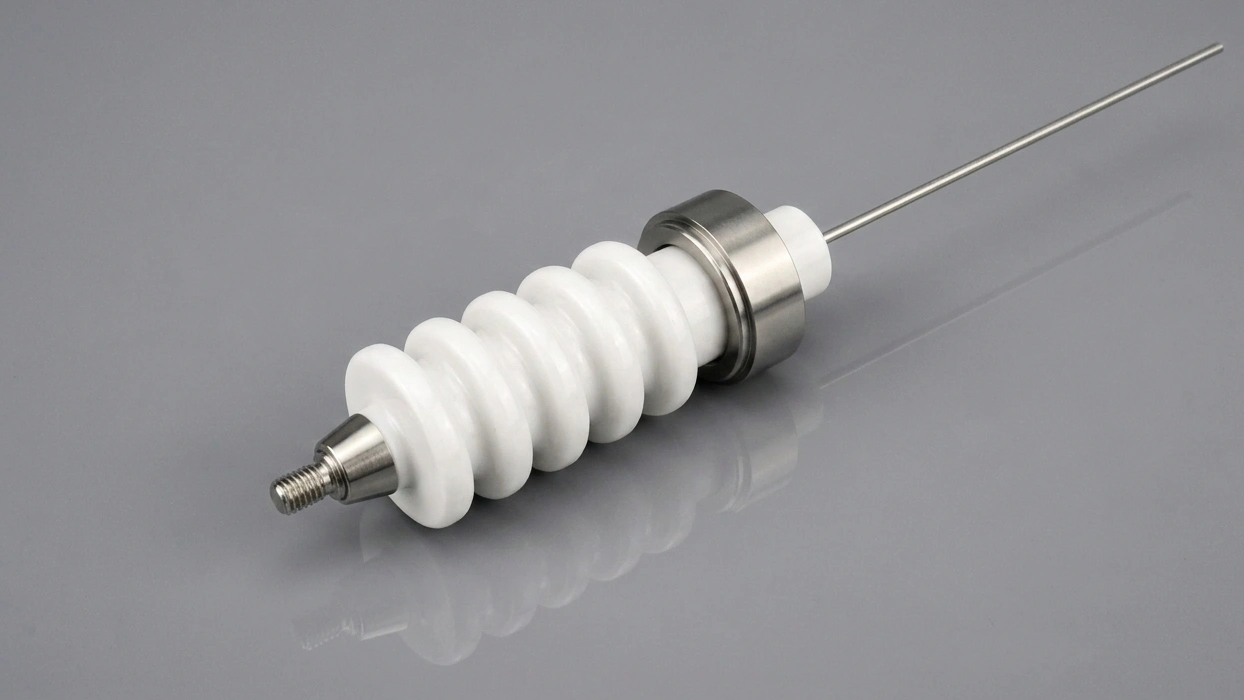
B.Ceramic-to-Metal Seals (Ceramic Feedthroughs)
Ceramic sealing is a more complex process involving Vacuum Brazing. The ceramic (usually Alumina) is first "metallized" to allow a braze alloy (like Gold or Silver-Copper) to flow and bond the ceramic to the metal components. This creates a molecular bond that is significantly more robust.
2. Performance Comparison: The Data Breakdown
To help you decide, we have summarized the technical differences in the table below:
| Feature | Glass-to-Metal Seals (GTMS) | Ceramic-to-Metal Seals (Brazed) |
|---|---|---|
| Max Operating Temp | Generally < 250°C | Up to 600°C – 1000°C (Material dependent) |
| Mechanical Strength | Moderate (Glass is brittle and prone to cracking) | High (Superior tensile and compressive strength) |
| Thermal Shock Resistance | Low to Moderate | Excellent (Designed for extreme cycles) |
| Electrical Insulation | Good | Superior (High-purity Alumina offers higher resistivity) |
| Chemical Stability | Susceptible to certain acids/alkalis | Highly inert (Ideal for medical and corrosive fluids) |
| Typical Leak Rate | 1×10⁻⁸ ~ 1×10⁻⁹ mbar·L/s | < 1×10⁻¹⁰ mbar·L/s(Ultra-High Vacuum grade) |
3. Why Ceramic Prevails in High-Reliability Missions
While GTMS is cost-effective for high-volume consumer electronics, Ceramic Feedthroughs are the gold standard for mission-critical hardware for three primary reasons:
A. Superior Thermal and Mechanical Resilience
Unlike glass, which can shatter under sudden thermal gradients, technical ceramics are engineered for stability. According to the NIST (National Institute of Standards and Technology), advanced structural ceramics maintain their integrity in cryogenic temperatures and extreme heat, making them vital for space exploration.
B. Precision CTE Matching
One of the greatest challenges in sealing is the Coefficient of Thermal Expansion (CTE) mismatch. Ceramic feedthroughs allow for more precise material combinations (e.g., Alumina with Niobium or Titanium). You can explore detailed material property tables via the American Society for Metals (ASM International) to understand how these pairings prevent stress-induced seal failure.
C. Environmental Inertness
In the medical field, glass can occasionally undergo "leaching" when exposed to harsh bodily fluids over decades. Ceramics, however, are biocompatible and stable. The National Center for Biotechnology Information (NCBI) has published numerous studies on the long-term stability of Alumina and Zirconia in human physiological environments, confirming their superiority for active implantable devices.
4. Selection Guide: When to Choose Which?
Use the following table as a quick reference for your procurement or R&D team:
| If your project requires… | Recommended Technology |
|---|---|
| Low cost, high volume, mild environment | Glass-to-Metal (GTMS) |
| Ultra-High Vacuum (UHV) integrity | Ceramic-to-Metal |
| Active Human Implantation (Biocompatibility) | Ceramic-to-Metal |
| High Power / High Voltage Transmission | Ceramic-to-Metal |
| Standard Hermetic Sensors | Glass-to-Metal (GTMS) |
5.Conclusion
The choice between glass and ceramic sealing isn’t just about cost—it’s about the margin of safety. While Glass-to-Metal seals are sufficient for many industrial sensors, Ceramic-to-Metal feedthroughs are essential for environments where failure is not an option.