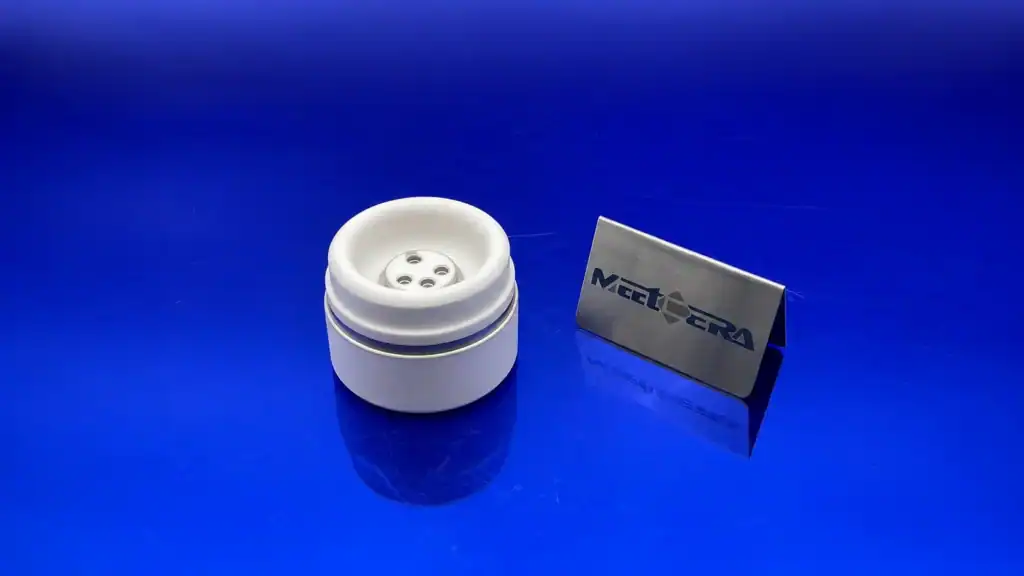
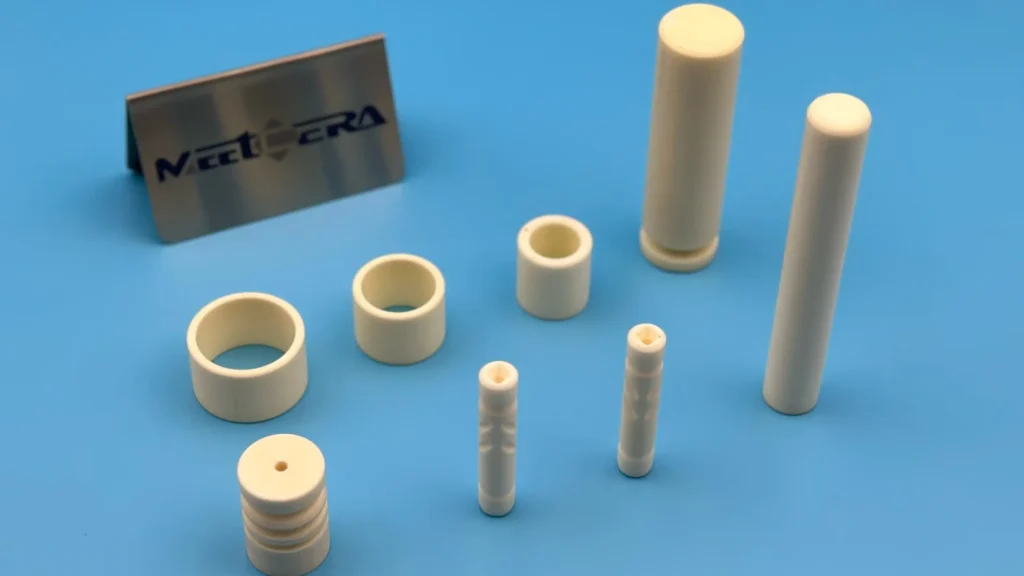
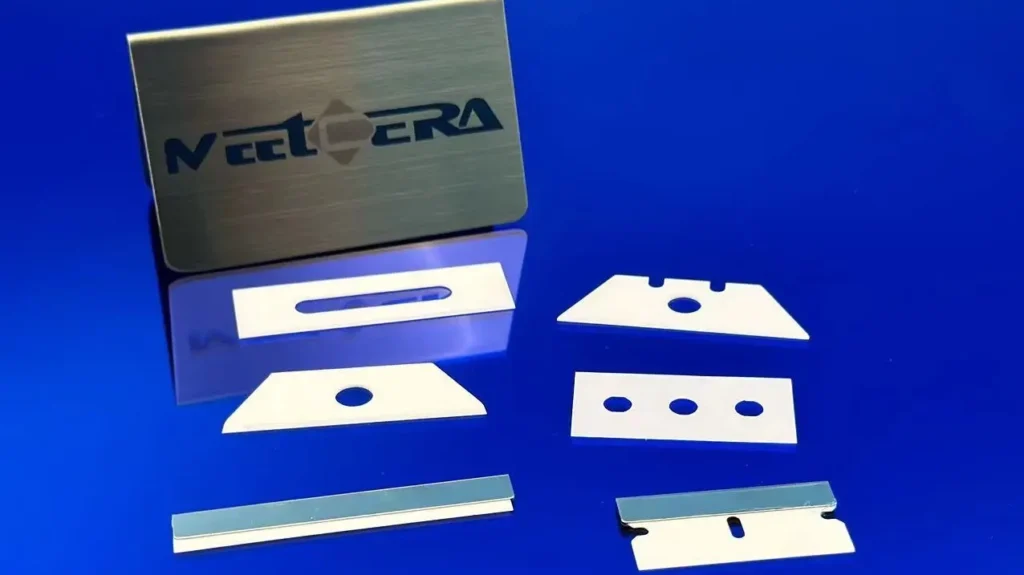
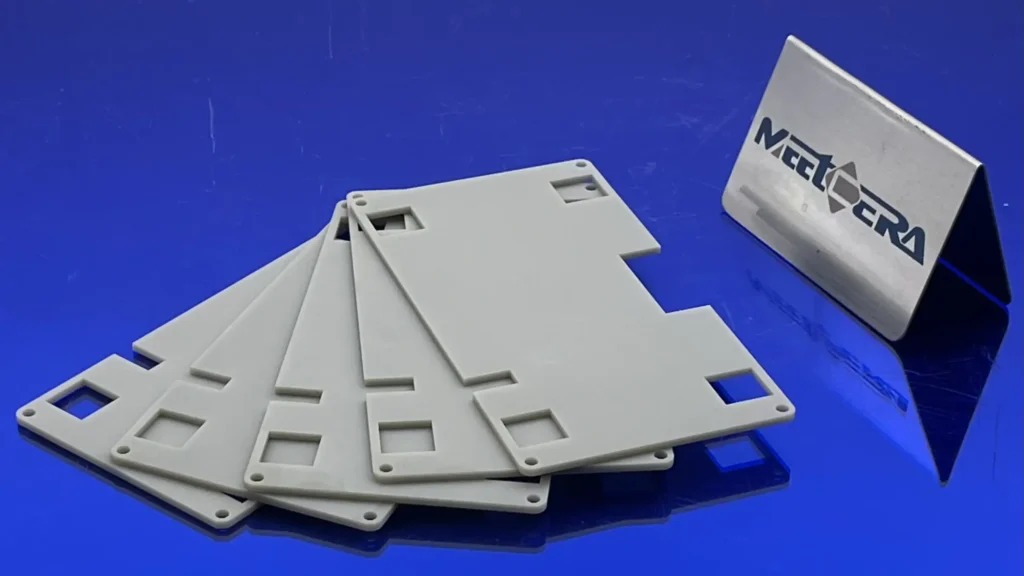
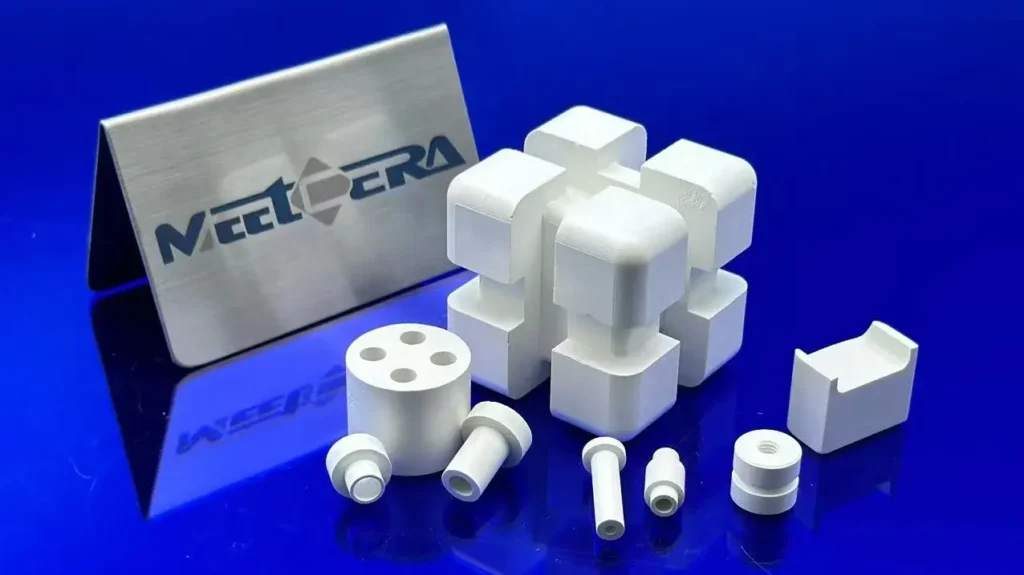
As a professional advanced ceramics manufacturer, Meetceras provides complete manufacturing solutions for customers requiring reliable and high-performance ceramic components.
We work closely with customers from initial design review through production to manufacture custom ceramic parts that meet specific dimensional, mechanical, electrical, and thermal requirements.
Engineering Support
Our engineering team provides:
Ceramic material selection assistance
Design optimization
Manufacturing feasibility analysis
Prototype development support
Component Manufacturing
We manufacture a wide range of:
Precision ceramic components
Electrical insulating parts
Wear-resistant ceramic components
High-temperature ceramic parts
Production Capability
Our manufacturing capability supports:
Small batch production
High-volume manufacturing
Ceramic Manufacturing Process
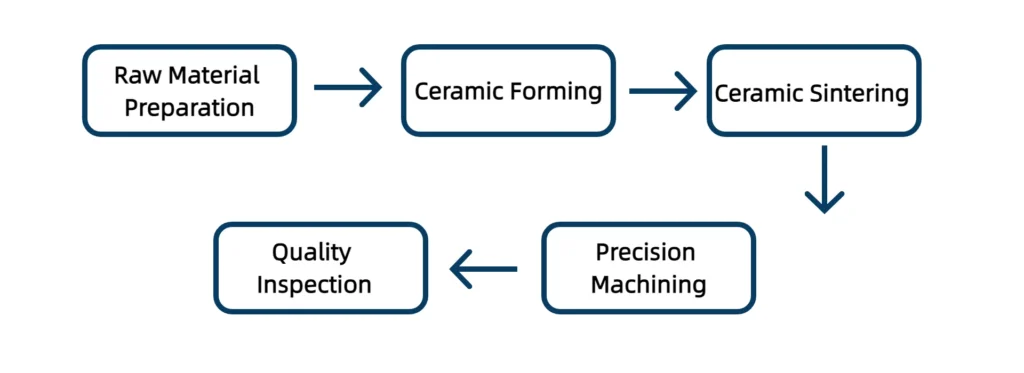
A reliable ceramic manufacturing process requires precise control at every production stage.
Meetceras integrates material preparation, ceramic forming, sintering, machining, and inspection to produce high-quality technical ceramic components with consistent performance.
Ceramic Forming Technologies
Different ceramic forming technologies are selected according to component geometry, size, tolerance requirements, and production volume.
Meetceras utilizes multiple forming methods to manufacture custom ceramic parts efficiently and consistently.
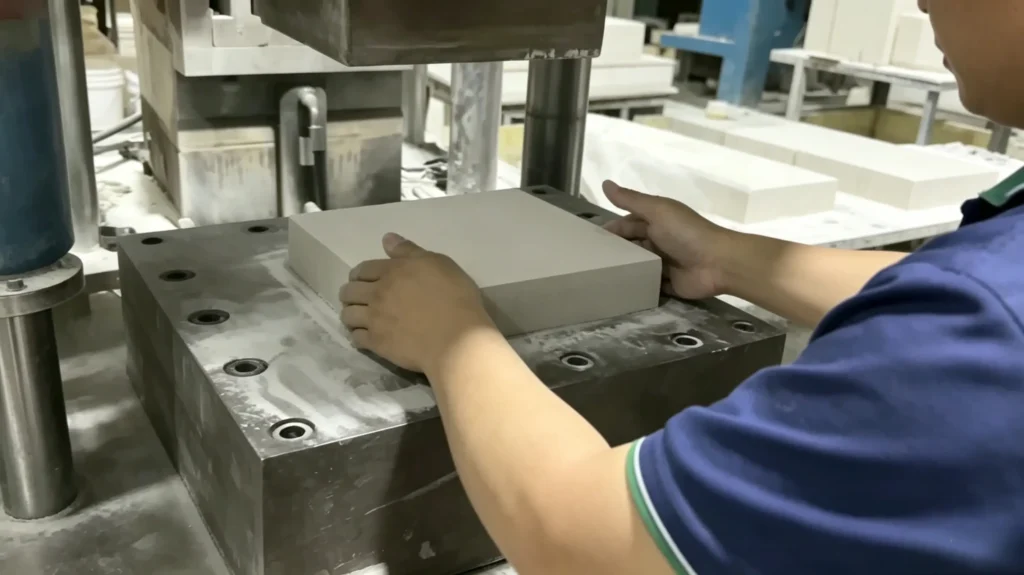
(1)Dry Pressing
A medium- to high-volume forming method for parts ranging from simple shapes to complex geometries with features like holes or grooves. It is efficient for producing components that meet final sintering tolerances without additional green-state machining.
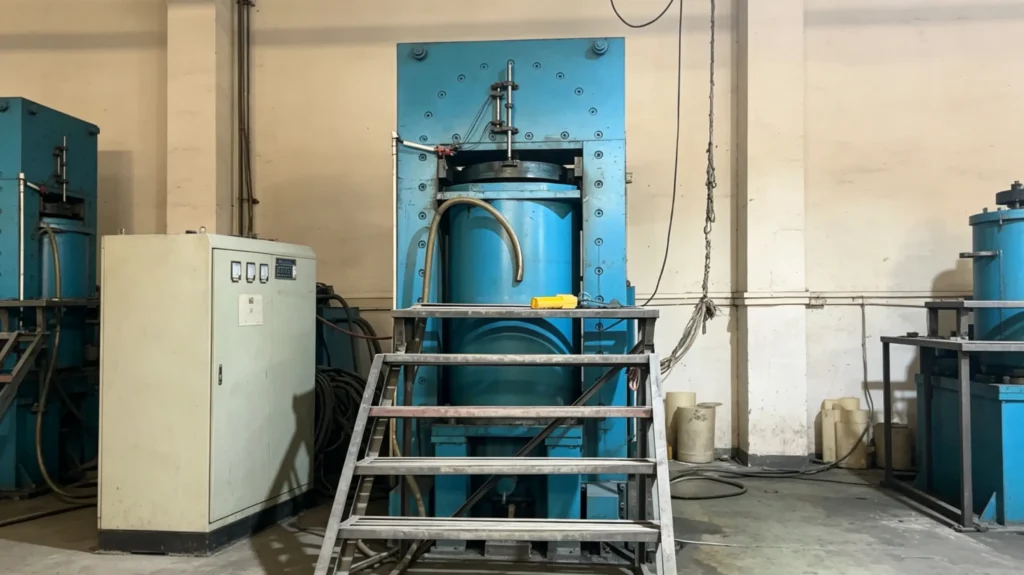
(2)Isostatic Pressing (IPC)
This technology applies uniform pressure to small-to-medium-volume parts, categorized by operating temperature:
Cold IPC: Uses flexible molds and liquid media at room temperature to create high-density blanks for subsequent sintering or forging.
Warm IPC: Operates at 80–450°C using specialized media to form materials like graphite or polymers that lack sufficient plasticity at room temperature.
Hot IPC: Subjects materials to simultaneous high heat and pressure, consolidating powder and completing the sintering process in a single step.
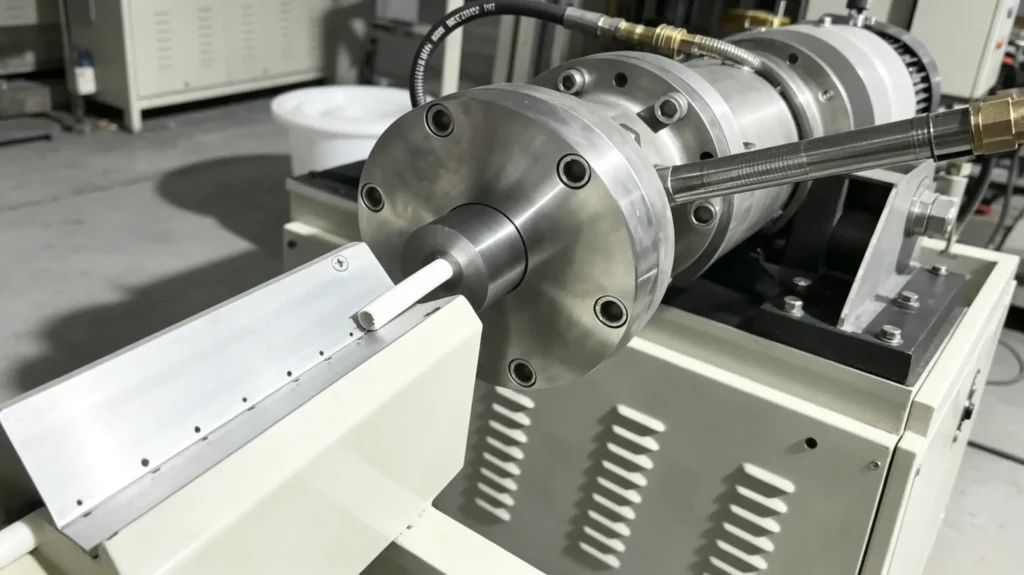
(3)Extrusion Molding
An efficient, continuous process specifically designed for producing long ceramic parts with a constant cross-section. The technique involves mixing ceramic powder with organic binders to create a plasticized feed, which is then forced through a shaped die under high pressure.
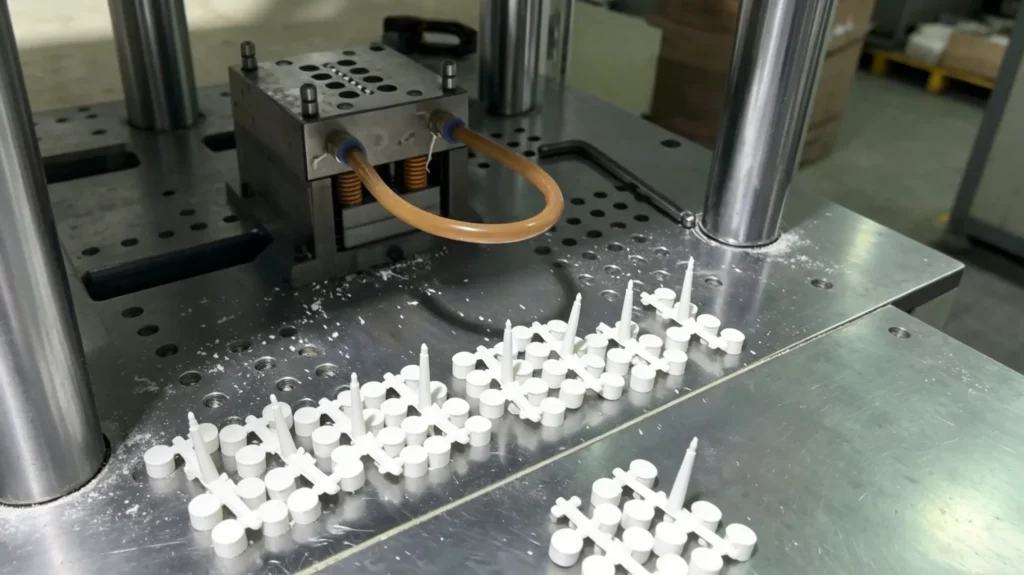
(4)Injection Molding
Similar to plastic manufacturing, this method achieves high precision for complex components. A homogeneous mixture of ceramic powder and organic binders is injected into a closed mold under high temperature and pressure, allowing for intricate geometries that are difficult to achieve via other forming techniques.
Ceramic Sintering Technologies
Meetcera optimizes ceramic performance by selecting the ideal sintering method based on material properties, application requirements, cost-efficiency, and structural complexity.
Request a Quote
Our team is here and ready to start talking, whatever your application may be. Request a quote today to send us your thoughts and get your project moving.