


What is the Role of Metallized Ceramics in Next-Gen Electric Vehicle Power Modules?
Introduction
As electric vehicles (EVs) push towards higher efficiency and power density, especially with the adoption of silicon carbide (SiC) power modules, traditional packaging materials are increasingly hitting performance ceilings. The combination of intense thermal loads and coefficient of thermal expansion (CTE) mismatches often leads to substrate cracking, solder fatigue, and premature failure.
This raises a critical question: how can power module reliability be maintained under these extreme conditions? Metallized ceramics, with their unique combination of electrical insulation, thermal conductivity, and mechanical compatibility, are emerging as a key solution for next-generation EV power modules.
1.Why are metallized ceramics essential for next-gen EV power modules?
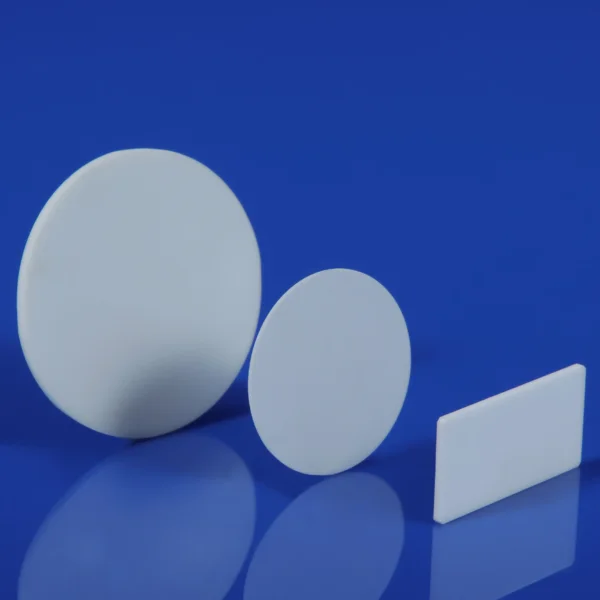
Metallized ceramics act as a high-reliability interface between semiconductor dies and metal housings. Their key benefits include excellent thermal management of SiC modules, enabling heat to be efficiently transferred from high-power devices to cooling systems; reduced CTE mismatch, minimizing mechanical stress during thermal cycling; and electrical insulation with high dielectric strength, ensuring safe operation under high voltage. These advantages make metallized ceramics indispensable for EV power modules where both power density and longevity are critical [1].
2.Which ceramic materials are commonly used, and how do their properties compare?
The most common substrates for metallized ceramics in power electronics are Al2O3 (Alumina), AlN (Aluminum Nitride), and Si3N4 (Silicon Nitride). Their thermal, mechanical, and electrical properties directly influence module performance.
| Material | Thermal Conductivity (W/m·K) | CTE (ppm/K) | Dielectric Strength (kV/mm) | Typical Use Case |
|---|---|---|---|---|
| Al2O3 | 25–30 | 7.5–8.5 | 10–15 | Low-to-mid power EV modules |
| AlN | 170–200 | 4.5–5.5 | 10–12 | High-power SiC modules, heat-intensive applications |
| Si3N4 | 20–30 | 3.0–3.2 | 12–15 | High-reliability, shock-resistant modules |
Higher thermal conductivity (AlN) directly correlates with improved heat dissipation efficiency in SiC-based modules. This comparison highlights that AlN-based metallized ceramics are increasingly favored for next-gen EV power modules due to their superior thermal performance and CTE compatibility with SiC [2].
3. How does metallization improve ceramic performance in power modules?
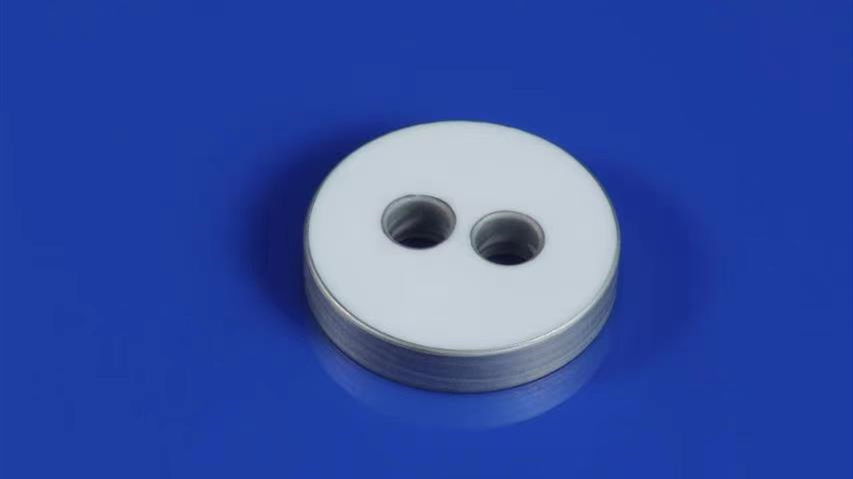
Metallization involves depositing thin layers of metals (commonly Mo-Mn or Ni) on ceramic substrates to form solderable surfaces. This process facilitates hermetic soldering to copper or direct-bonded metal (DBM) structures, improves mechanical adhesion and reduces the risk of delamination under thermal cycling, and enables high-current conduction through the ceramic without compromising insulation. This layer is critical to achieving both mechanical robustness and electrical connectivity, forming the backbone of high-reliability ceramic substrates for EV power modules [3].
4. What are the main challenges when implementing metallized ceramics in EV modules?
While metallized ceramics offer significant advantages, engineers must carefully address CTE mismatch with attached metals, which can induce stress during rapid thermal transients, surface quality and metallization adhesion, which affect long-term solder joint reliability, and cost and manufacturability, particularly for large-area AlN substrates. Mitigation strategies include optimized metallization patterns, stress-relief features in module design, and precise control over firing processes to ensure metallization integrity.
5. How does this impact the design of next-gen EV power modules?
Integrating metallized ceramics allows designers to achieve higher power densities without thermal or mechanical failures, ensure long-term reliability under harsh automotive temperature cycles, and enable compact module form factors, critical for EV efficiency and packaging. As a result, metallized ceramics are no longer optional but a strategic enabler for advanced EV power electronics.