


Common Defects in Nickel Plating of Metallized Ceramics and How to Solve Them
Nickel plating is widely used in metallized ceramic manufacturing, especially for Mo-Mn metallized alumina ceramics intended for ceramic-to-metal brazing. Poor plating quality can lead to peeling, blistering, uneven thickness, pinholes, and poor brazing wettability.
The correct approach is to treat surface preparation, plating, and inspection as one integrated process.
1.Why Is Nickel Plating Important for Metallized Ceramics?
A stable nickel layer provides a reliable metallic surface for brazing and electrical connections.
Poor nickel adhesion can result in:
- Brazing failure
- Coating delamination
- Hermetic leakage
2.Common Nickel Plating Defects at a Glance
| Defect | Common Cause | Solution |
|---|---|---|
| Peeling | Poor adhesion | Improve cleaning and activation |
| Blistering | Moisture or contamination | Improve rinsing and drying |
| Uneven thickness | Poor current distribution | Optimize part positioning, current, and time |
| Pinholes | Incomplete coverage | Improve surface preparation |
| Dark surface | Unstable plating bath | Strictly control bath conditions |
| Poor brazing | Oxidized, thin, or discontinuous nickel | Control thickness and surface condition |
3.In-Depth Analysis of Key Defects and Countermeasures
(1). Why Does Nickel Plating Peel?
Peeling is usually caused by contamination, oxidation, insufficient activation, or a weak Mo-Mn metallization layer.
Key principle: Fix the interface first before increasing nickel thickness.
Always inspect the Mo-Mn layer quality first, then control cleaning, activation, and nickel deposition.
(2). How Can Nickel Plating Blistering Be Prevented?
Blistering typically results from trapped moisture, gas, or contaminants beneath the nickel layer.
Better cleaning, rinsing, activation, and thorough drying significantly reduce this problem.
(3). Why Is Nickel Thickness Uneven?
Uneven thickness affects brazing performance and dimensional tolerance.
Control part positioning, current distribution, plating time, and component geometry.
(4). What Causes Poor Brazing After Nickel Plating?
Poor brazing occurs when the nickel surface is oxidized, contaminated, discontinuous, or too thin.
Match the nickel plating with the brazing alloy, temperature, atmosphere, and thermal cycle.
4.How Should Nickel Plating Be Inspected?
Visual inspection alone can miss hidden defects. Recommended checks include:
- Nickel thickness measurement
- Surface appearance evaluation
- Adhesion testing
- Cross-sectional metallographic inspection
- Brazing wettability assessment
- Helium leak testing for hermetic parts
Frequently Asked Questions (FAQ)
Q: What is nickel plating on metallized ceramics?
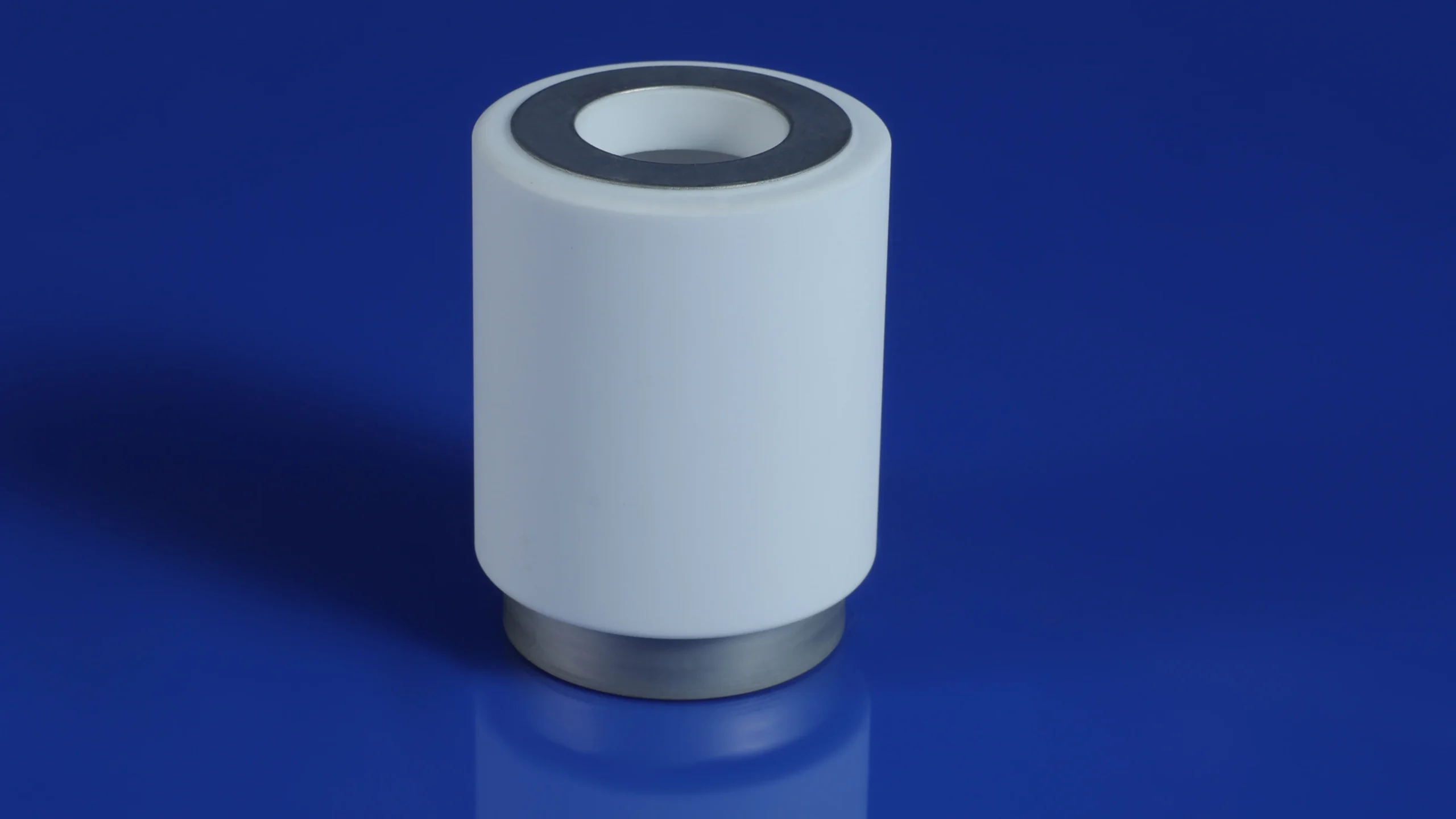
It is a nickel coating applied over a ceramic metallization layer (commonly Mo-Mn metallized alumina) to create a suitable surface for brazing and electrical connection.
Q: Why does nickel plating peel?
Common causes include poor cleaning, contamination, oxidation, weak Mo-Mn metallization, and insufficient activation.
Q: What nickel thickness is typically used for metallized ceramics?
There is no universal thickness. It depends on the ceramic material, metallization system, part geometry, brazing process, and application requirements.
[1] ASTM International — Historical specification ASTM F44 addressed metallized ceramic surfaces and secondary metallic layers for ceramic-to-metal joining.
[2] NIST — National Institute of Standards and Technology provides technical references for measurement and surface engineering of inorganic materials.