
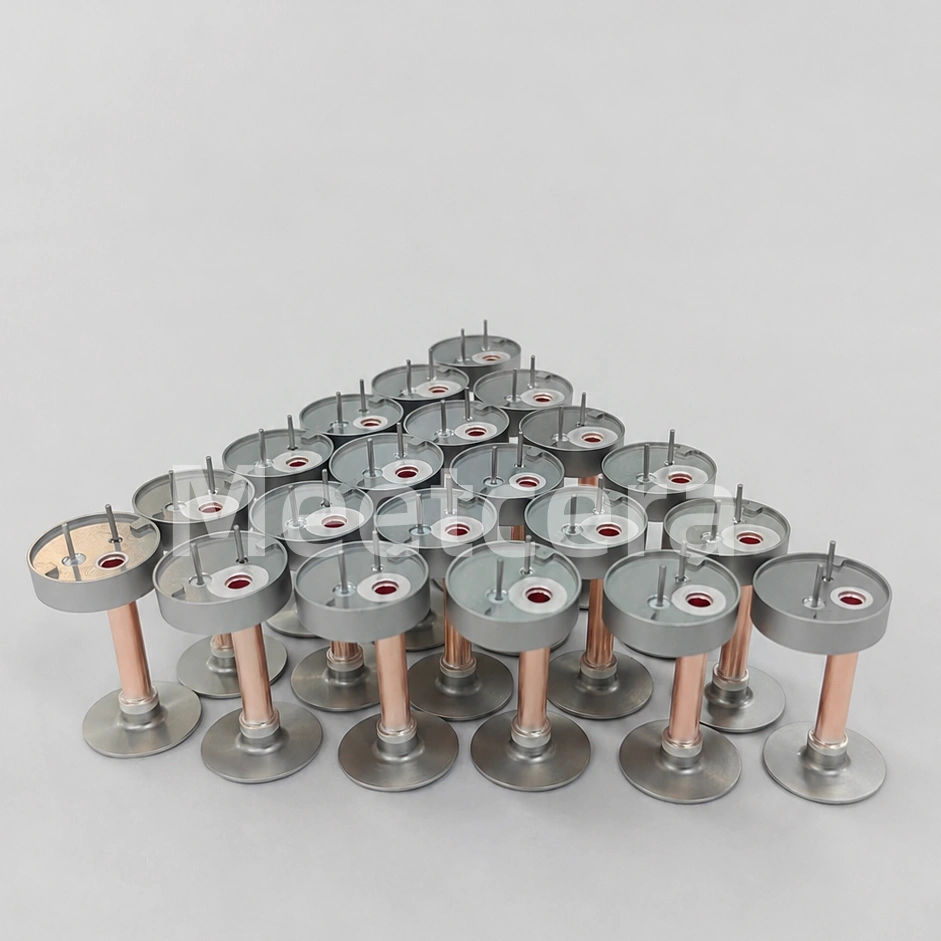
Direct brazing of advanced ceramics and metals is generally unfeasible due to poor wettability and severe thermal expansion mismatches. Achieving a reliable, hermetic, and high-strength joint requires pre-metallization techniques like the Molybdenum-Manganese (Mo-Mn) method or Active Metal Brazing (AMB), coupled with proper stress-relief structural design.
Introduction: The Challenge of Ceramic-Metal Integration
In modern advanced manufacturing, electronic packaging, aerospace, and new energy sectors, advanced ceramic materials—such as alumina (Al2O3), silicon nitride (Si3N4), and silicon carbide (SiC)—are widely used due to their exceptional high-temperature performance, wear resistance, electrical insulation, and corrosion resistance.
However, due to inherent limitations in the shaping and machining of ceramics, they must almost always be assembled with metal components to function effectively in real-world applications.
So, can ceramics and metals be directly brazed? According to professional materials engineering principles, the short answer is no; ceramics must undergo metallization or specialized surface modification before they can be successfully joined to metals.
Why Can Ceramics and Metals Not Be Directly Brazed?
To understand why direct brazing fails, we must examine the fundamental physical and chemical differences between ceramic and metallic materials. Conventional brazing relies on liquid filler metal wetting and spreading across the base material surface, creating physical and chemical metallurgical bonds.
When attempting to join ceramics directly, engineers encounter two major hurdles:
1. Extremely Poor Wettability
Ceramics consist of ionic or covalent bonds with exceptionally low surface free energy. Most conventional metallic fillers (such as silver-, copper-, or aluminum-based alloys) exhibit a liquid contact angle far greater than 90° on ceramic surfaces, preventing them from naturally spreading or forming a bonded interface.
2. Severe Coefficient of Thermal Expansion (CTE) Mismatch
The CTE of engineering ceramics is significantly lower than that of structural metals. During the cooling phase following high-temperature brazing, differential contraction rates generate massive residual thermal stress at the joint interface. This stress frequently causes the brittle ceramic substrate to microcrack or the bond to fail completely.
Attempting to bypass surface treatment for “direct brazing” yields unreliable, low-strength joints that are completely unsuitable for demanding engineering applications.
The Core Solution: Ceramic Metallization Technology
To solve the wettability challenge, industrial manufacturing relies on ceramic metallization. This process firmly attaches a thin metallic layer or reaction film onto the ceramic surface, imparting metallic properties so that conventional filler metals can wet, flow, and bond to it.
| Metallization Method | Mechanism | Primary Industrial Application |
|---|---|---|
| Molybdenum-Manganese (Mo-Mn) | Sintered Mo-Mn paste forms a glassy-phase bond; surface is subsequently nickel-plated. | High-hermeticity vacuum electronics, power tubes. |
| Active Metal Brazing (AMB) | Active elements (Ti, Zr) alloyed in filler metal react in-situ with the ceramic surface. | Power electronics substrates, high-power LED housings. |
The Molybdenum-Manganese (Mo-Mn) Method
As the most established technique for high-hermeticity applications (such as vacuum electronics), the Mo-Mn method relies on a precise workflow:
- Application: A slurry containing molybdenum and manganese powders is painted or screened onto the ceramic joint area.
- Sintering: The assembly is fired at high temperatures in a controlled reducing atmosphere. Manganese diffuses into the ceramic grain boundaries, anchoring the molybdenum layer tightly.
- Plating: The sintered surface is electroplated with a thin layer of nickel to facilitate flawless wetting and brazing with standard silver-copper filler metals.
Active Metal Brazing (AMB)
Active Metal Brazing represents a modern, streamlined alternative. Instead of a multi-step pre-treatment, active elements—such as titanium (Ti) or zirconium (Zr)—are alloyed directly into the filler metal (e.g., Ag-Cu-Ti).
When heated under a vacuum or inert atmosphere, the active titanium segregates to the interface and reacts chemically with the ceramic substrate. This forms a thin, wettable reaction layer in-situ during a single brazing cycle, drastically reducing manufacturing time.
Stress Relief and Structural Design for Durable Joints
Overcoming wettability via metallization is only half the battle. To prevent joint failure caused by thermal stress, advanced design principles must be implemented during component fabrication.
1. Ductile Interlayers
Inserting a soft, ductile metal foil—such as oxygen-free copper, pure nickel, or Kovar—between the ceramic and structural metal helps absorb thermal expansion mismatch through localized plastic deformation, buffering the stress transferred to the brittle ceramic.
2. Joint Geometry Optimization
Engineers should avoid sharp, right-angle butt joints, which concentrate stress points. Instead, opt for configurations like lap joints, stepped joints, or feathered edges to effectively redistribute dangerous tensile stresses into safer shear stresses.
Frequently Asked Questions (FAQ)
Why is nickel plating necessary after the Mo-Mn process?
Molybdenum surfaces alone do not alloy or wet smoothly with standard silver-based brazing fillers. Nickel plating acts as an intermediate bridge that protects the Mo layer from oxidation and promotes optimal capillary action for the liquid filler metal.
Conclusion
Direct brazing of ceramics and metals is unfeasible under conventional manufacturing conditions. Achieving durable, hermetic, and high-strength ceramic-to-metal joints requires pre-metallization or active brazing to alter surface wettability, combined with proper stress-relief structural designs to withstand severe thermal expansion cycles.