

What Causes Helium Leak Failures in Ceramic-to-Metal Hermetic Seals Under Vacuum?
A ceramic-to-metal seal may pass visual inspection but still fail helium leak testing because of microcracks, poor brazing, weak metallization, or contamination. In vacuum applications, these defects can cause vacuum loss and unstable equipment performance.
The most effective solution is to control ceramic quality, metallization, brazing, cleaning, and helium leak testing as one integrated process.
1.What Are the Main Causes of Helium Leak Failure?
If the sealing interface contains microscopic defects, helium can pass through the joint and create a leakage path. The main causes are ceramic cracking, poor metallization adhesion, incomplete brazing, braze voids, contamination, and thermal stress.
| Failure Mode | Typical Cause | Prevention |
|---|---|---|
| Ceramic crack | Thermal stress | Control heating and cooling |
| Poor metallization | Weak adhesion | Control Mo-Mn coating |
| Incomplete brazing | Poor wetting | Optimize filler and clearance |
| Braze voids | Poor filler flow | Improve brazing profile |
| Contamination | Oil or moisture | Improve cleaning |
| Thermal-cycle failure | CTE mismatch | Select compatible materials |
The key point: helium leak failure is usually a process-chain problem, not simply a material problem.
2.How Does Metallization and Brazing Affect Hermeticity?
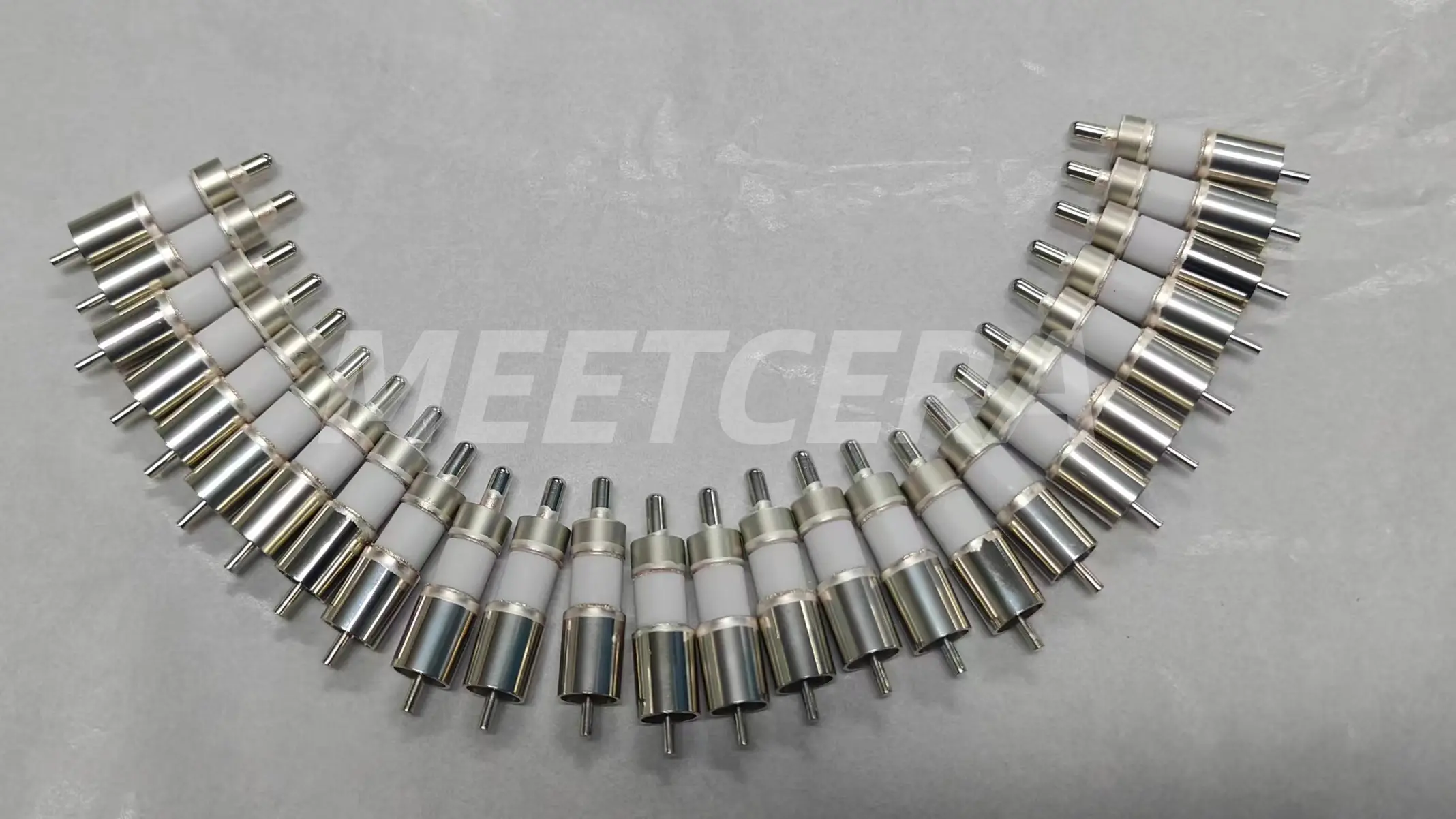
Poor metallization can prevent the brazing filler from forming a reliable ceramic-to-metal bond, while incorrect brazing temperature or joint clearance can create voids and microscopic leakage channels.
A controlled Mo-Mn metallization layer, nickel plating, suitable brazing alloy, and optimized joint clearance provide a stable sealing interface. Heating and cooling must also be controlled because ceramic and metal have different coefficients of thermal expansion.
Material → Metallization → Plating → Brazing → Cooling → Leak Testing should be treated as one continuous process.
3.Why Can a Good Seal Still Fail Helium Testing?
Sometimes the component is sound but the test system itself is leaking. Fixture leakage, residual helium, trapped volumes, insufficient pump-down, or incorrect calibration can all produce abnormal results.
Before rejecting a component, check the leak detector calibration, fixture tightness, helium background, vacuum level, and possible virtual leaks. ASTM E498/E499 provide established methods for mass-spectrometer leak detection.[1][2]
4.How Can Ceramic-to-Metal Leak Failures Be Prevented?
Hermeticity should be controlled throughout production rather than checked only at the end. Ceramic surface quality, Mo-Mn metallization, nickel plating, brazing conditions, cleaning, and thermal cycling should all have defined process controls.
For recurring failures, compare the failed sample, production records, sealing interface, and helium leak data. If leakage appears after thermal cycling, focus particularly on CTE mismatch, ceramic cracking, and braze-interface stress.
5.What Information Is Needed for Engineering Evaluation?
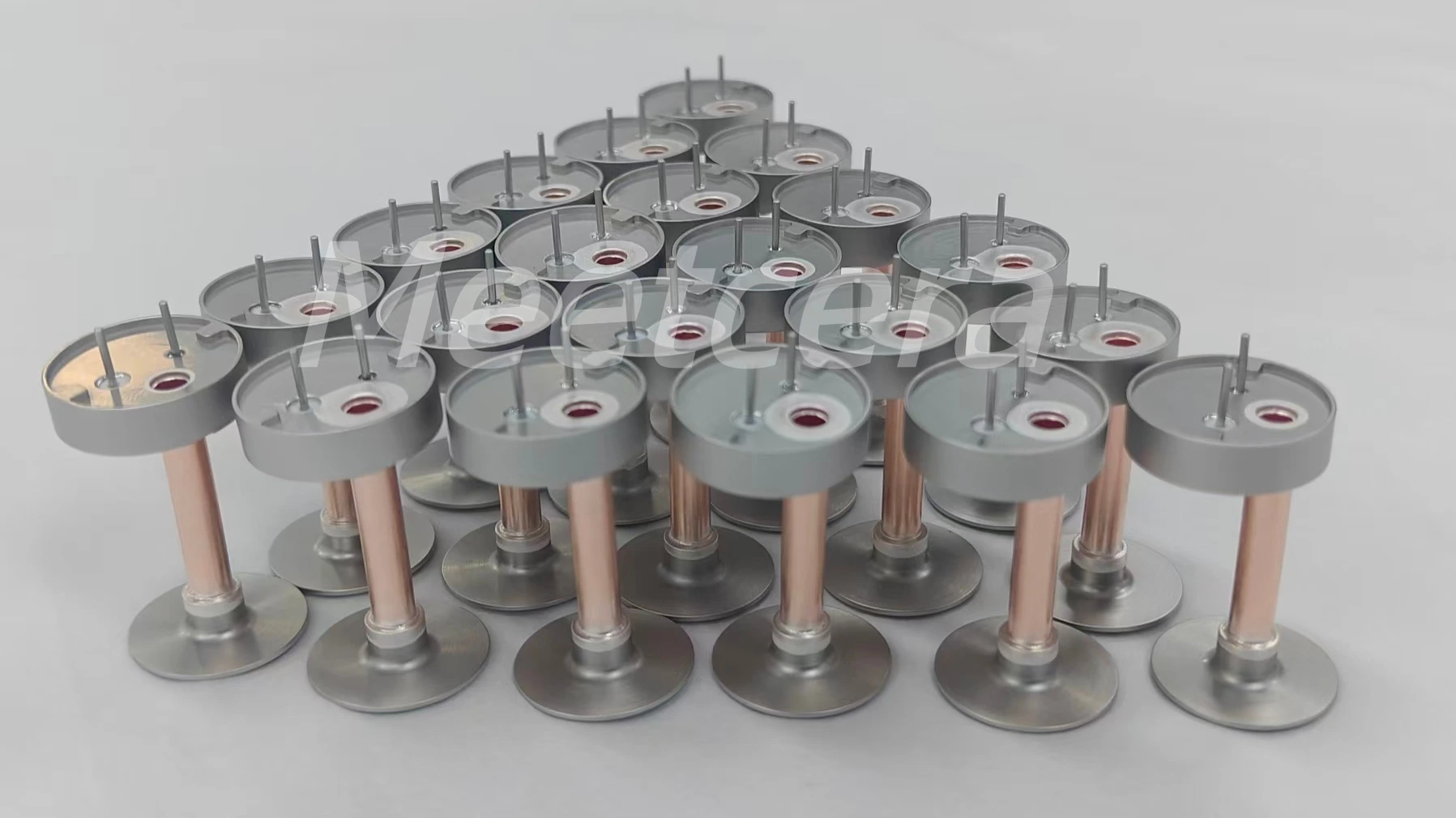
For a new vacuum feedthrough or ceramic-to-metal component, a small sample can be useful before mass production.
Providing a drawing, ceramic and metal materials, metallization specification, brazing alloy, required leak rate, operating vacuum, or failed samples allows engineers to identify potential leakage mechanisms more efficiently.
6.FAQ
(1)What is a helium leak test?
It uses helium as a tracer gas and a mass-spectrometer leak detector to identify very small leakage paths.
(2)Can a ceramic-to-metal seal pass visual inspection but fail helium testing?
Yes. Microcracks, voids, and interfacial leakage paths may not be visible.
(3)How can helium leak failures be reduced?
Use compatible materials, controlled metallization and brazing, proper cleaning, controlled thermal cycles, and calibrated helium leak testing.
7.Engineering Conclusion
A helium leak failure is usually the final symptom of an earlier process problem.
With 15 years of experience in metallized ceramics, ceramic-to-metal brazing, and hermetic components, our engineering principle is simple: do not only ask how to make a failed part pass—identify where the leakage path was created.
If you are developing a vacuum ceramic component or experiencing recurring helium leak failures, a drawing, specification, leak-rate requirement, or small sample can be used for a practical engineering evaluation.
References
[1] ASTM E498/E498M — Mass-Spectrometer Leak Detection