Metal-to-Ceramic Brazing Process: A 5-Step Guide?
Metal-to-ceramic brazing is widely used to join technical ceramics with metals in vacuum feedthroughs, X-ray tubes, power electronics, medical devices, and semiconductor equipment.
Unlike welding, brazing uses a filler metal to create the joint without melting the base materials. The main challenge is achieving reliable wetting, thermal compatibility, and hermetic sealing.
1.What Is Metal-to-Ceramic Brazing?
Metal-to-ceramic brazing uses a molten filler metal to join a ceramic component with a metal component. After cooling, the filler forms a permanent joint.
Ceramics are difficult to braze because conventional fillers generally do not wet untreated ceramic surfaces effectively. Poor wetting can result in weak bonding, voids, cracking, or leakage.
Two main methods are commonly used:
- Ceramic metallization + brazing
- Active metal brazing
The suitable method depends on the ceramic, metal, filler, joint design, and application requirements.
2.Why Is Ceramic Difficult to Braze?
The biggest challenges are poor wettability and CTE mismatch.
If the filler does not wet the ceramic properly, the joint may have incomplete coverage or weak bonding. At the same time, ceramic and metal can expand at different rates during heating and cooling, creating residual stress.
This may lead to:
- Ceramic cracking
- Joint failure
- Metallization peeling
- Hermetic leakage
Therefore, reliable ceramic-to-metal brazing requires both surface preparation and thermal compatibility.
3.What Are the 5 Steps in the Metal-to-Ceramic Brazing Process?
(1). Select Compatible Materials
Material selection should consider the ceramic, metal, and filler as one complete system.
Common ceramics include alumina, AlN, Si₃N₄, zirconia, and sapphire. Common metals include Kovar, stainless steel, copper, nickel alloys, and molybdenum.
Key factors include CTE, brazing temperature, wettability, mechanical strength, electrical requirements, and operating environment.
(2). Clean and Prepare the Surfaces
Surface contamination can directly reduce wetting and joint strength.
Ceramic and metal surfaces should be cleaned to remove oil, grease, particles, oxides, and machining residues.
Depending on the application, solvent cleaning, ultrasonic cleaning, or other controlled surface treatments may be used.
The goal is simple: create a clean and stable bonding surface before brazing.
(3). Apply Metallization or Use Active Brazing
For alumina and other suitable ceramics, a conventional process may use:
Ceramic preparation → Mo-Mn metallization → firing → nickel plating → brazing
The metallized layer creates a surface that conventional brazing fillers can wet more effectively.
For a deeper explanation of the metallization process, see our Ceramic Metallization capability page.
For suitable material combinations, active metal brazing can provide direct ceramic wetting without the traditional metallization sequence.
The correct route should be confirmed through sample testing before mass production.
(4). Select the Filler and Control Joint Clearance
The filler metal must be compatible with both the ceramic joining surface and the metal component.
Important factors include:
- Melting temperature
- Wetting behavior
- Mechanical properties
- Environmental resistance
- Joint clearance
Joint clearance is not a universal value. It should be established according to the filler alloy, materials, brazing temperature, and joint geometry.
(5). Control Heating, Cooling, and Inspection
Proper fixturing helps maintain alignment and joint clearance during the thermal cycle.
Important parameters include:
- Heating rate
- Brazing temperature
- Holding time
- Atmosphere
- Cooling rate
Controlled cooling is especially important because excessive thermal stress can cause ceramic cracking.
After brazing, inspection may include visual inspection, dimensional inspection, microscopic examination, mechanical testing, and helium leak testing.
For hermetic assemblies, leak testing is critical because a visually acceptable joint may still contain microscopic leakage paths.

4.What Are the Common Ceramic Brazing Problems?
| Problem | Common Cause |
|---|---|
| Poor wetting | Contamination or unsuitable filler |
| Weak joint | Poor filler flow or joint design |
| Ceramic cracking | CTE mismatch or thermal stress |
| Metallization peeling | Poor surface preparation |
| Voids | Incomplete filler flow |
| Leakage | Cracks, voids, or incomplete bonding |
Changing only the brazing temperature is often not enough. Troubleshooting should examine materials, surface preparation, filler, joint design, and the complete thermal cycle.
5.Where Is Metal-to-Ceramic Brazing Used?
Metal-to-ceramic brazing is commonly used where electrical insulation, mechanical strength, or hermetic sealing is required.
Typical applications include:
- Vacuum feedthroughs
- X-ray tube components
- High-voltage components
- Power electronics
- Medical devices
- Semiconductor equipment
- Hermetic packages
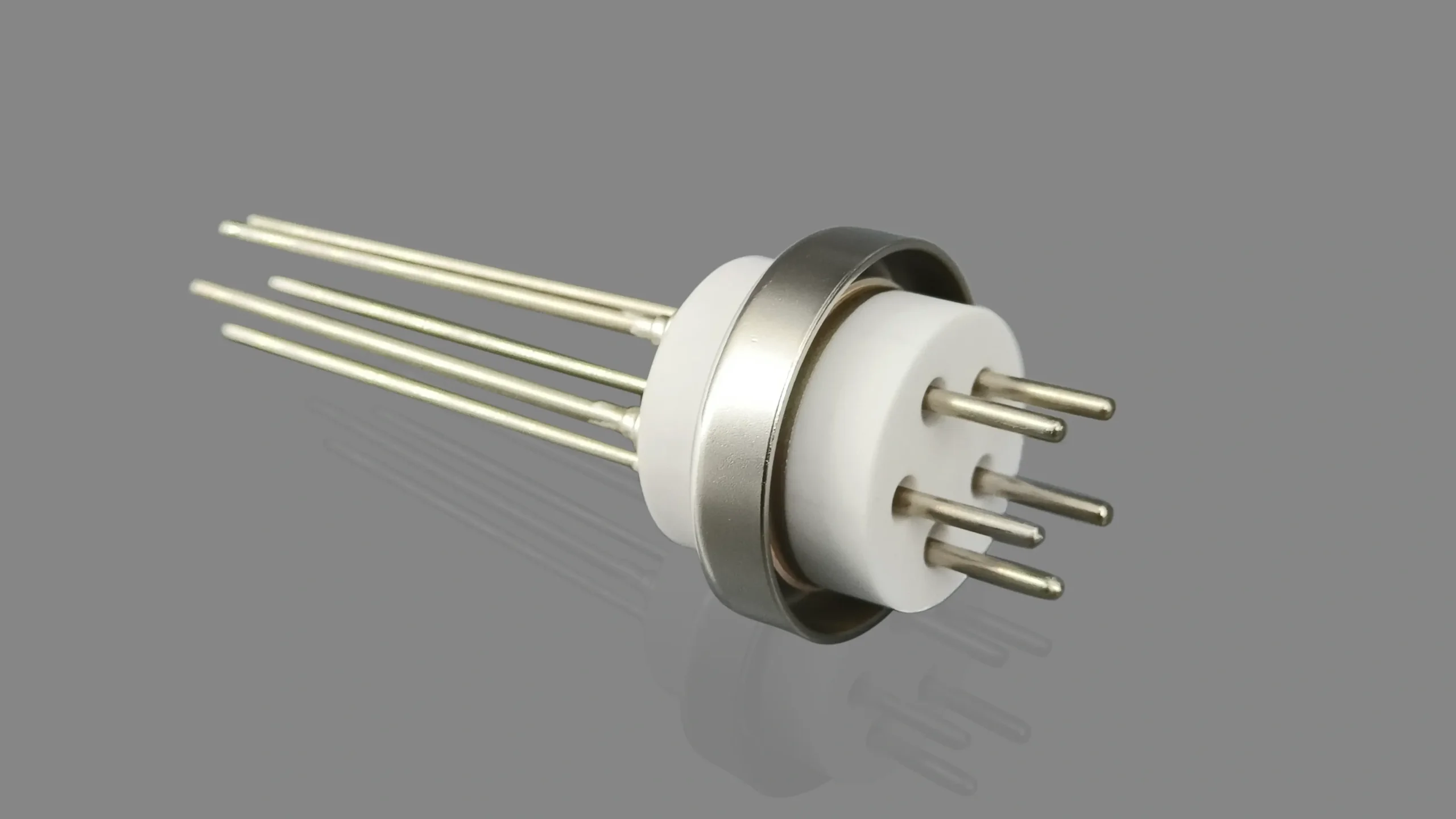
For vacuum applications, ceramic vacuum feedthroughs can combine electrical insulation with a reliable ceramic-to-metal hermetic connection.
6.What Ceramic-to-Metal Brazing Capabilities Does Meetcera Provide?
Meetcera provides customized ceramic-to-metal brazing solutions for industrial and high-reliability applications.
Typical capabilities include:
| Parameter | Capability |
|---|---|
| Alumina | 95–99% Al₂O₃ |
| Metallization | Mo-Mn |
| Metallization Thickness | Approx. 15–25 μm |
| Nickel Plating | Approx. 8–10 μm |
| Brazing Temperature | Up to 850°C for applicable assemblies |
| Metals | Kovar, stainless steel, copper, selected alloys |
| Testing | Helium leak testing |
Actual process parameters are determined by the ceramic, metal, filler, geometry, and required performance.
For application-specific requirements, see our Ceramic-to-Metal Brazing Service or contact our engineering team with your drawing or sample.
7.Conclusion
A reliable metal-to-ceramic brazing process depends on more than simply heating two materials together.
The essential process is:
Material selection → Surface preparation → Metallization or active brazing → Filler and clearance control → Heating, cooling, and inspection
Controlling these factors helps achieve reliable joints for vacuum, electrical, medical, semiconductor, and industrial applications.
With 15 years of experience in the metallized ceramics and ceramic-to-metal joining industry, our engineering team focuses on practical process control rather than simply supplying ceramic components. If you are developing a new ceramic-to-metal assembly, you can send us your drawing or sample for a preliminary process discussion.
8.FAQ
(1)Why is Mo-Mn metallization used?
Mo-Mn metallization creates a metallic bonding surface on suitable ceramics, allowing conventional brazing fillers to wet the ceramic more effectively.
(2)What metals can be brazed to alumina?
Common choices include Kovar, stainless steel, copper, nickel alloys, and molybdenum, depending on the application and joining method.
(3)How is a ceramic-to-metal brazed joint tested?
Typical inspections include visual and dimensional inspection, microscopic examination, mechanical testing, and helium leak testing for hermetic assemblies.